Understanding Chain-Reaction Crashes on Illinois Highways
Key Takeaways: In a multi-vehicle pileup on an Illinois interstate, liability is divided among everyone who contributed, based on each person’s percentage of fault under Illinois’s modified comparative negligence system. An injured driver can recover damages only if they are 50% or less at fault, with awards reduced by their share of blame. The 25% threshold matters: a defendant found 25% or more at fault can be jointly and severally liable for all non-medical damages, while all liable drivers remain fully responsible for medical expenses. Liability extends beyond colliding drivers to include those who illegally stopped on shoulders, rideshare drivers and TNCs, and negligent renters. Insurers make initial fault determinations, but courts have the final say if parties cannot settle. Because multiple parties, policies, and fault percentages are involved, preserving evidence early and working with a knowledgeable Chicago motor vehicle accident lawyer protects your recovery.
A multi-vehicle pileup on an Illinois interstate rarely has a single cause, so liability is usually divided among several drivers based on each person’s share of fault. These chain-reaction collisions unfold in seconds on busy corridors, and sorting out who pays involves multiple insurers, conflicting witness accounts, and detailed crash analysis. Many pileups begin with a rear-end collision that triggers subsequent impacts, making the initial fault determination critical. For drivers in DuPage, Kankakee, Will, and Winnebago Counties who commute on interstates like I-90, I-294, I-88, and I-55, understanding how Illinois apportions responsibility is the first step toward protecting a claim. Fault is shared, and the amount each driver owes depends on their percentage of blame.
If you were injured in a chain-reaction collision and are unsure who is responsible, the team at McDevitt and Cobb P.C. is here to help. Call us at 312-332-0072 or reach out online to discuss your case.
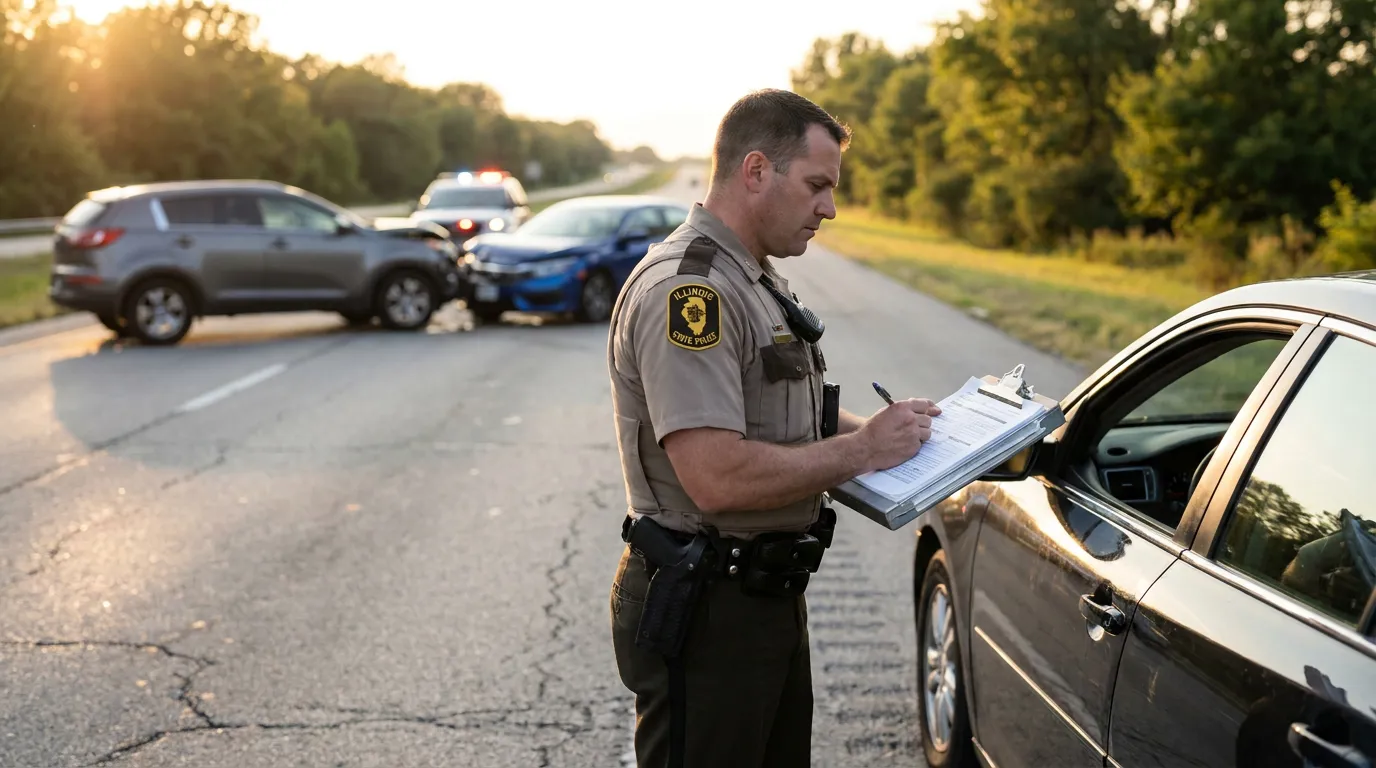
How Illinois Decides Fault in a Multi-Vehicle Pileup
Illinois uses a modified comparative fault system to distribute blame when multiple drivers contribute to a crash. In a pileup, investigators and insurers reconstruct the sequence of impacts and assign each driver a percentage of responsibility. That percentage controls both whether an injured party can recover and how much.
Modified Comparative Negligence Explained
Under Illinois law, an injured driver can recover damages as long as they are not more than 50% at fault, but any award is reduced by their own percentage of blame. The controlling statute, 735 ILCS 5/2-1116, bars recovery only when a plaintiff is found more than 50% at fault, and otherwise damages are diminished proportionally. A driver found 20% responsible for a pileup who suffers $100,000 in damages would recover $80,000. This is why every percentage point matters in a contested modified comparative negligence dispute.
The 50% bar rule is strict. If a driver is found 51% or more at fault, they recover nothing, even if other drivers also acted carelessly. You can review the Illinois comparative fault statute for exact language.
💡 Pro Tip: Because a small shift in your assigned fault percentage can move you above or below the 50% bar, preserving dashcam footage, photos, and witness contact information early can be decisive.
The 25% Rule and Shared Liability
Illinois draws an important line at 25% fault when deciding how much a defendant can be forced to pay. Under 735 ILCS 5/2-1117, a defendant found 25% or more at fault is jointly and severally liable for all non-medical damages, meaning that single driver could be required to pay the entire non-medical judgment. A defendant found less than 25% at fault is only severally liable for those damages, limiting exposure to their proportionate share.
Medical costs are treated differently. Regardless of fault percentage, all liable defendants remain jointly and severally responsible for the plaintiff’s past and future medical expenses under 735 ILCS 5/2-1117. Even a minimally at-fault driver in a serious interstate pileup can be on the hook for full medical bills.
| Defendant’s Fault Share | Non-Medical Damages | Medical Expenses |
|---|---|---|
| 25% or more | Jointly and severally liable for all | Jointly and severally liable |
| Less than 25% | Severally liable for own share only | Jointly and severally liable |
Who Can Be Held Responsible in an Interstate Pileup
Liability in a multi-vehicle accident can extend beyond the drivers who physically collided. Depending on circumstances, several parties may share responsibility. Common defendants include:
- Drivers who were following too closely, speeding, or distracted
- A driver who illegally stopped or stood on the highway shoulder
- Rideshare drivers and the transportation network companies (TNCs) that employ them
- Renters or lessees whose negligence triggered the collision
One frequently overlooked cause involves vehicles stopped where they should not be. Under 625 ILCS 80/10, drivers are prohibited from stopping on highway shoulders along designated routes near major Chicago-area interchanges, including the I-90/I-294 interchange near O’Hare. A driver who illegally stops on an interstate shoulder can be found at fault for triggering a pileup if their unlawful presence contributes to the crash.
💡 Pro Tip: If a stopped vehicle contributed to your crash, note its exact location and whether hazard lights or warning devices were used, as this detail can shift fault analysis.
Rideshare Drivers and TNC Insurance
When an Uber or Lyft driver is part of a pileup, applicable insurance depends on the driver’s status at the moment of impact. Under 625 ILCS 57/10, if the driver had already accepted a ride request, the TNC must provide primary automobile liability coverage of at least $1,000,000 for death, personal injury, and property damage. If the driver was logged into the app but had not yet accepted a ride, contingent coverage of $50,000 per person and $100,000 per incident for death and personal injury, plus $25,000 for property damage, applies. This layered structure often determines which policy pays first in a multi-vehicle Illinois highway crash claim.
A TNC’s own conduct can also create liability. Under 625 ILCS 57/15, transportation network companies may not allow drivers with more than three moving violations in the prior three years, or one major violation in the prior three years (such as reckless driving or evading police), to operate on the platform. DUI (driving under the influence) is treated under a separate disqualifying provision that bars drivers convicted of DUI within the past seven years. If a disqualified driver was allowed to drive and later caused an interstate pileup, injured parties may have a negligent entrustment or hiring claim against the company plus a direct negligence claim against the driver.
Illegally Stopped and Rental Vehicles
Illinois has addressed the financial responsibility of negligent renters through legislative findings focused on the consequences of limiting renter liability for vehicle damage. The General Assembly, in 625 ILCS 27/5, found that 1988 amendments limiting negligent renters’ liability for vehicle damage to $200 had transferred financial responsibility from renters to rental companies, and that this law contributed to an almost three-fold increase in driver crash and fatality rates in Illinois, reflecting a public-policy concern about the financial and safety consequences of limiting renter liability for vehicle damage. That policy can affect how coverage and financial responsibility are allocated when a rental vehicle contributes to a chain-reaction collision.
💡 Pro Tip: After any rideshare or rental-vehicle crash, screenshot the app status and keep rental paperwork. Coverage disputes frequently hinge on documentation that becomes hard to obtain later.
When to Work With a Motor Vehicle Accident Lawyer in Chicago
Contested pileups often come down to how fault percentages are calculated, where guidance from a motor vehicle accident lawyer in Chicago can make a meaningful difference. Insurers typically make the initial fault determination by interviewing parties and witnesses and reviewing the police crash report. If a settlement cannot be reached, courts make the final determination of comparative negligence. An insurer’s early assessment is not the last word.
Injured parties who disagree with an insurer’s fault assessment have an administrative option in addition to a civil claim. A driver may file a complaint with the Illinois Department of Insurance, although the Department cannot determine comparative negligence, which remains a matter for settlement or the courts. You can review the state’s overview of comparative negligence rules to understand this distinction.
Because so many parties and policies can be involved, careful case preparation matters. A knowledgeable Illinois car accident lawyer can gather crash reconstruction evidence, identify every potentially liable driver or company, and address attempts to shift blame onto you. Firms respected for handling interstate pileup liability claims understand how the 25% and 50% thresholds shape strategy from the outset.
Frequently Asked Questions
-
Can I recover damages if I was partly at fault for the pileup?
Yes, in many cases. Under 735 ILCS 5/2-1116, you may recover as long as you are not more than 50% at fault, though your award is reduced by your percentage of responsibility. If you are found 51% or more at fault, recovery is barred.
-
Who determines fault in a multi-vehicle crash?
Insurers make the initial assessment by reviewing the crash report, statements, and evidence. If the parties cannot settle, courts make the final determination of comparative negligence, so an insurer’s decision is not conclusive.
-
Can a driver who was only slightly at fault still owe money?
Potentially, yes. Even a driver found less than 25% at fault remains jointly and severally liable for the plaintiff’s medical expenses under 735 ILCS 5/2-1117, though their share of non-medical damages is limited to their proportion.
-
How does insurance work if an Uber or Lyft driver caused the crash?
It depends on the driver’s app status at the time. Under 625 ILCS 57/10, coverage can reach $1,000,000 once a ride is accepted, with lower contingent limits when the driver is logged in but has not yet accepted a request.
-
What if I disagree with the insurance company’s fault decision?
You have more than one avenue. You can file a complaint with the Illinois Department of Insurance, but because that agency cannot decide comparative negligence, a civil claim is often necessary to resolve a disputed fault question.
Protecting Your Right to Recovery After a Pileup
Liability in an Illinois interstate pileup is rarely simple, and the outcome depends heavily on specific facts of each collision. Fault is measured in percentages, the 25% and 50% thresholds carry major consequences, and rideshare, rental, and shoulder-stopping rules can bring additional parties into the case. For injured drivers in DuPage, Kankakee, Will, and Winnebago Counties, acting quickly to preserve evidence and understand these rules can protect both the ability to recover and the size of recovery.
If you or a loved one was hurt in a chain-reaction collision, McDevitt and Cobb P.C. is ready to review the facts and explain your rights. Call a motor vehicle accident lawyer in Chicago today at 312-332-0072 or contact us now to get started.