Car Doors, Bike Lanes, and Your Right to Compensation in Chicago
Key Takeaways: In most Chicago bicycle dooring accidents, the person who opened the car door may be liable. Under 625 ILCS 5/11-1407, no one may open a door on the side facing moving traffic unless it is reasonably safe and can be done without interfering with traffic, which includes bicycles. That person might be a driver, a passenger, a rideshare or taxi operator, or an employee whose employer may share responsibility. Illinois uses modified comparative fault. A cyclist who is 50% or less at fault may still recover damages, reduced by their share of fault, but a cyclist more than 50% at fault recovers nothing. Families who lose a cyclist may bring a wrongful death claim, and the same fault rules generally apply. Most injury and death claims must be filed within 2 years, and claims against public entities may have shorter deadlines. Early evidence, such as footage, witness statements, and medical records, can help prove fault and protect your claim.
In many Chicago dooring crashes, the person who opened the car door may be the one held responsible. Illinois law requires anyone opening a vehicle door on the side facing moving traffic to make sure it is reasonably safe first, and cyclists are part of that traffic. Liability is not always that simple, though. A driver, passenger, rideshare operator, or commercial vehicle owner may share responsibility, and insurers often argue the cyclist was partly at fault.
You should not have to sort out liability on your own while you recover from serious injuries. The personal injury team at McDevitt and Cobb P.C. can review what happened and explain your options. Call 312-332-0072 or contact us now to talk about your case.
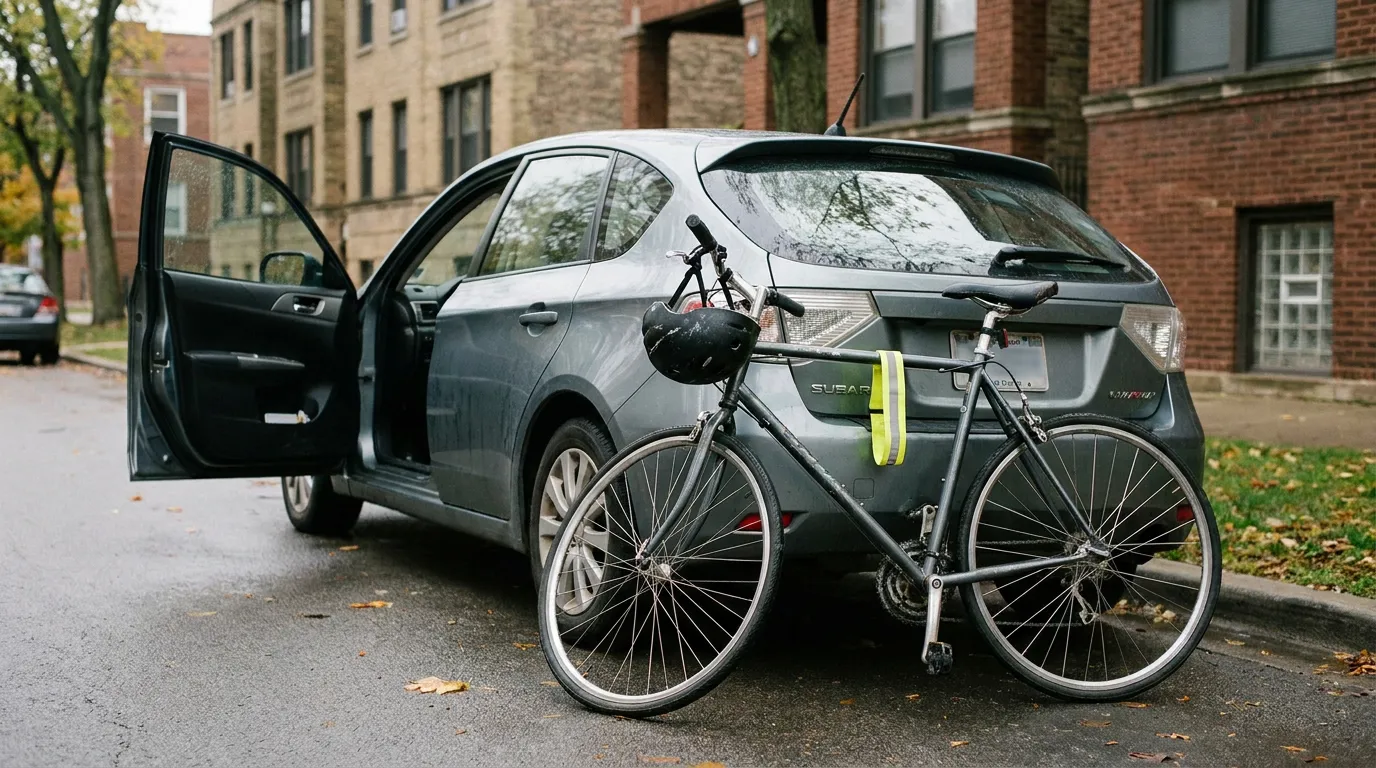
Why Dooring Crashes Happen So Often on Chicago Streets
Dooring is a predictable risk anywhere bikes travel next to parked cars. Chicago has heavy on-street parking, and many bike routes run directly beside it. A door swinging open just a few feet ahead can leave a rider no time to stop or swerve.
Painted Bike Lanes Still Sit Beside Parked Cars
Illinois law treats a standard painted bike lane as space for bicycles, but it still allows parking right next to it. Under 605 ILCS 30/4.1(a)(2), a Class II bikeway provides a restricted right-of-way for the exclusive or semi-exclusive use of bicycles. Through motor vehicle travel is prohibited, but vehicle parking and crossflows by pedestrians and motorists are permitted. That design can put riders squarely within the "door zone."
What Research Says About Parked Cars and Injury Risk
Safety research supports what many Chicago cyclists already know. A case-crossover study compared the injury risk of 14 types of route infrastructure, using major streets with parked cars and no bike infrastructure as the baseline. It found that street design affects how likely cyclists are to be injured. The study does not decide fault in any single crash, but it helps explain why dooring keeps happening.
Illinois Dooring Law and the Duty to Look Before Opening
Illinois has a statute aimed directly at dooring. The Illinois Vehicle Code’s rule on opening vehicle doors, 625 ILCS 5/11-1407, bars anyone from opening a door on the side facing moving traffic unless it is reasonably safe and can be done without interfering with other traffic. Bicycles count as traffic. The statute also bars leaving a door open on that side longer than needed to load or unload passengers.
Breaking this statute does not automatically win a civil case, but it can be strong evidence. In Illinois, violating a statute designed to protect human life or property is prima facie evidence of negligence. The defense can still offer evidence that the person acted reasonably. You still have to prove the four elements of negligence: duty, breach, causation, and damages. In practice, that means medical records, witness statements, photographs, and sometimes accident reconstruction.
Some local ordinances follow the same approach. Lake Forest, for example, has a municipal provision that closely tracks the state statute. The principle is common across Illinois: the person opening the door generally has to check for oncoming cyclists first.
Who May Share Dooring Liability
The statute applies to any "person" who opens a door unsafely, so the driver is not the only possible defendant. Responsibility depends on who opened the door, why, and who controlled the vehicle.
| Potentially Liable Party | When Liability May Arise |
|---|---|
| Driver | Opened their own door without checking mirrors or traffic |
| Passenger | Opened a rear or side door into an approaching cyclist |
| Rideshare or taxi driver | Stopped in or next to a bike lane, or told a passenger to exit on the traffic side |
| Commercial vehicle owner | An employee opened a door within the scope of their employment, which may make the employer vicariously liable |
Rideshare and Taxi Dooring Claims
Rideshare dooring cases often involve more than one party and more than one insurance policy. A passenger who opens a door into a cyclist may be directly liable, and the driver may share fault depending on where and how they stopped. These claims can turn on app data, trip records, and which coverage applied.
💡 Pro Tip: If a rideshare vehicle was involved, write down the plate number and the service it was using, and get the driver’s name if you can. Those details can help identify the right insurance coverage later.
How Comparative Fault Can Affect a Bicycle Dooring Accident Claim
Illinois uses modified comparative fault, which means your own share of fault may reduce your recovery. Under 735 ILCS 5/2-1116, a cyclist who is 50% or less at fault may still recover damages, reduced by their percentage of fault. A cyclist found more than 50% at fault recovers nothing. This modified comparative negligence rule often becomes the main battleground in dooring cases.
Defense arguments tend to follow familiar patterns. Insurers may claim the cyclist:
- Rode too close to parked cars
- Was riding at night without a light
- Was going too fast for conditions
- Was distracted or not paying attention
Evidence is how you answer these arguments. Camera footage, witness accounts, and physical evidence of where the door struck can help show that the person who opened the door caused the crash.
When a Dooring Crash Takes a Life
Families who lose a cyclist in a dooring crash may be able to bring a claim under the Illinois Wrongful Death Act, 740 ILCS 180. Under the Act, the decedent’s own comparative fault is weighed using Sections 2-1116 and 2-1107.1 of the Code of Civil Procedure. Damages may be reduced, or barred entirely if the decedent was more than 50% at fault.
The Act also looks at the fault of each beneficiary. Under 740 ILCS 180/2, if a family member who would receive damages was 50% or less at fault, their share is reduced in proportion to their fault. If they were more than 50% at fault, they recover nothing.
Filing Deadlines You Should Not Overlook
Illinois sets strict time limits for injury and death claims. Most personal injury claims, including non-fatal dooring injuries, must be filed within 2 years of the injury under 735 ILCS 5/13-202. Wrongful death actions generally must be filed within 2 years after the death under 740 ILCS 180/2. There are limited exceptions.
Claims against public entities may follow different and shorter deadlines. Under the Local Governmental and Governmental Employees Tort Immunity Act, claims against local public entities, such as the City of Chicago, generally must be filed within 1 year (745 ILCS 10/8-101). Claims involving the CTA have their own notice requirements and short filing periods, and claims against the State go to the Court of Claims. Exceptions are interpreted narrowly, so it is wise to act quickly.
💡 Pro Tip: Ask nearby businesses for security footage as soon as you can. Many systems overwrite recordings within days, and that footage may be the clearest evidence of how the door opened.
Building a Strong Dooring Claim After Your Injury
A dooring claim is generally only as strong as the evidence behind it. A police report, photos of the vehicle and door, your damaged bike and helmet, and witness contact information can all help establish fault. Medical records can connect the crash to your injuries, and wage records can help show your economic losses.
Talking with a Chicago bike accident lawyer early can help you avoid common mistakes. Recorded statements to an insurer, gaps in medical treatment, and social media posts may all be used against you. You can also find more guidance on the McDevitt and Cobb P.C. personal injury resources page.
McDevitt and Cobb P.C. focuses on representing injured people and their families, not insurers or at-fault parties. If you need a bicycle dooring accident lawyer, our team can investigate the facts, identify everyone who may share responsibility, and pursue the compensation the law may allow.
Frequently Asked Questions
1. Is the driver always liable for a bicycle dooring accident in Chicago?
Not always. Under 625 ILCS 5/11-1407, the duty falls on whoever opens the door, so a passenger may be liable instead of or alongside the driver.
2. Can I recover damages if I was partly at fault?
Possibly. Under 735 ILCS 5/2-1116, you may recover damages if you were 50% or less at fault, reduced by your percentage of fault. If you were more than 50% at fault, you would recover nothing.
3. How long do I have to file a dooring injury claim?
Generally, you have 2 years from the date of injury under 735 ILCS 5/13-202. Claims involving public entities may have shorter deadlines, often 1 year for local government entities.
4. Does riding in a bike lane protect me from blame?
Riding in a bike lane can help your case, but it does not guarantee a result. Under 605 ILCS 30/4.1(a)(2), parking is permitted next to Class II bike lanes, and insurers may still argue that you rode too close to parked cars.
5. What if my loved one died in a dooring crash?
Your family may be able to bring a wrongful death claim under 740 ILCS 180. It generally must be filed within 2 years after the death, with shorter deadlines possible if a public entity is involved.
Holding the Right Party Accountable
Dooring liability in Illinois usually starts with the person who opened the door, but comparative fault, multiple defendants, and strict deadlines can complicate any claim. Every case turns on its own facts.
If you or someone you love was hurt by an opening car door, help is available. Reach out to McDevitt and Cobb P.C. at 312-332-0072 or schedule your consultation to discuss your situation with our personal injury team.
Disclaimer: This content is for informational purposes only and is not legal advice. Every case is unique, and results may vary. Consult an attorney about your specific circumstances.