Staying Calm and Protecting Your Rights After an Illinois Collision
Key Takeaways: After a car crash in Illinois, ensure everyone is safe, call the police, document the scene with photos and witness information, exchange required details, and notify your insurer. Illinois law requires notifying police of accidents involving injury, death, or significant property damage. You are never obligated to give a recorded statement to the other driver’s insurance company. Illinois follows modified comparative negligence, you can recover only if you are not more than 50% at fault, with recovery reduced by your percentage. Strict deadlines apply: two years for personal injury, five years for property damage, and one year for government entity claims. Consulting an experienced motor vehicle accident lawyer early can protect your rights before critical deadlines pass.
A car crash in Illinois can leave you shaken, but the steps you take in the first minutes and days often shape your ability to recover. After ensuring safety, contact law enforcement, document the scene, exchange information, and notify your insurer. Illinois law requires immediate police notification of any accident involving injury or death, and a written crash report when property damage exceeds $1,500 (or $500 if any driver is uninsured). Acting carefully protects both your health and any future claim.
If you have been hurt in a collision, McDevitt and Cobb P.C. is ready to help. Call our team at 312-332-0072, visit our firm website to learn more, or reach out through our online contact form to discuss your situation. Early guidance can make a meaningful difference.
What to Do at the Scene of the Crash
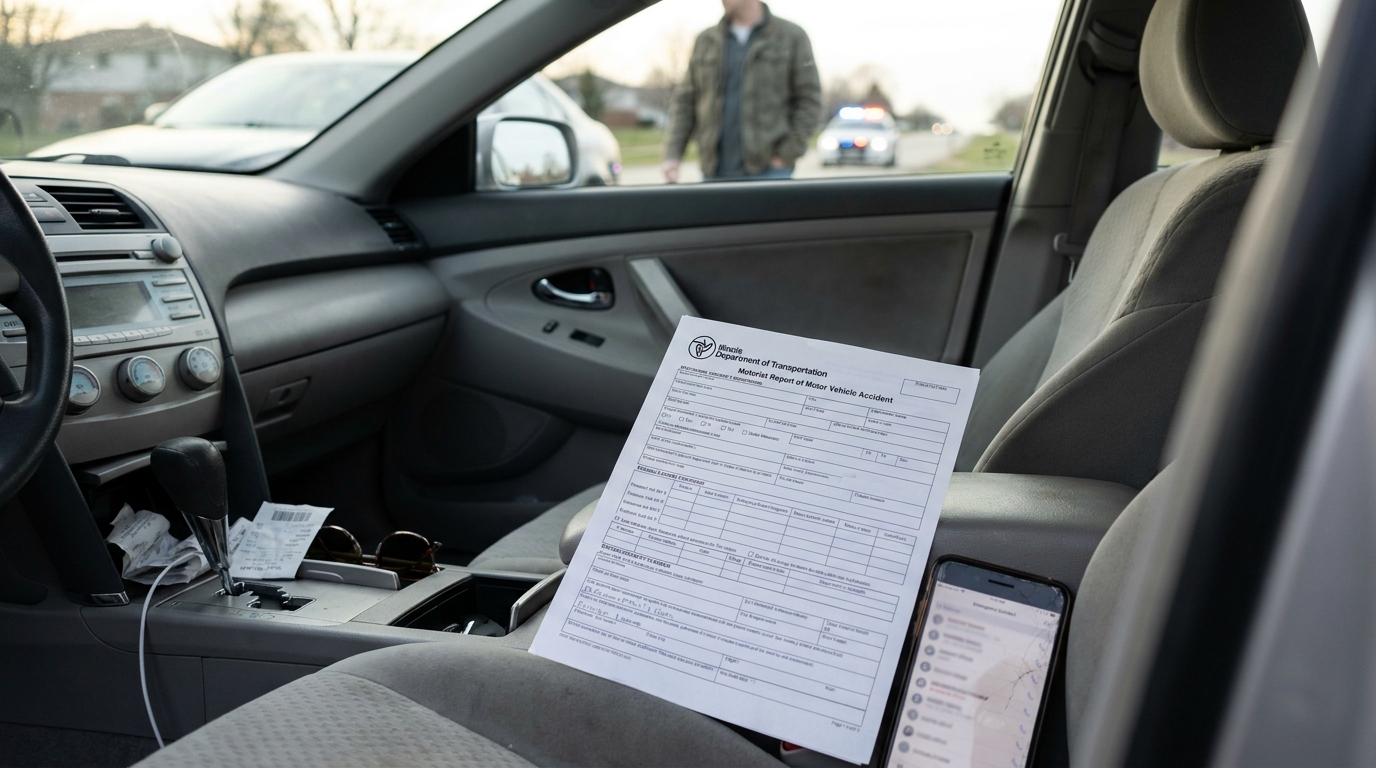
Your first priority at the scene is safety, followed by careful documentation. Once you have checked for injuries and called police, begin gathering details while they are fresh. Illinois law requires all drivers involved to give their name, address, and vehicle registration number to any other party involved. Exchanging this information is not optional.
Witnesses can become a deciding factor when accounts differ. People who saw what happened may not stay long, so collect their details early. You should also get the names and addresses of any witnesses. Contact your insurance company as soon as possible. Photographs of vehicle positions, road conditions, and visible injuries support your version of events later.
💡 Pro Tip: Use your phone to record a short video of the entire scene, including all vehicles, license plates, traffic signs, and weather conditions. This visual record can fill gaps that written notes miss.
Reporting the Accident and Notifying Your Insurer
Contacting police and your own insurer are two separate but equally important obligations. A police report creates an official record that insurers and courts rely on. Insurance companies determine fault by interviewing involved parties and witnesses and reviewing the accident report, which is why obtaining that report and gathering witness information carries real weight.
Cooperating with your own insurer is a condition of most policies. Promptly reporting the crash and providing honest information preserves your coverage. Failure to cooperate may result in your company refusing to pay any money to you or to protect you if others make a claim against you. The Illinois State Bar Association offers a helpful overview of how auto insurance obligations work for drivers.
You are not obligated to give a recorded statement to the other driver’s insurer. No law requires you to give a statement to the other party’s insurance company. In many cases, consult a lawyer before speaking with an adverse insurer, because early statements can be used against you.
💡 Pro Tip: If an adjuster from the other driver’s insurance company calls, you may politely decline to give a recorded statement and direct them to your attorney instead.
Understanding Illinois Fault Rules After a Crash
Illinois uses a modified comparative negligence system that directly affects what you can recover. Under this framework, your own share of fault reduces, and can even bar, your compensation. Comparative negligence allocates fault among parties, reducing recovery by the plaintiff’s percentage of fault.
The specific threshold in Illinois is set by statute. Under 735 ILCS 5/2-1116, modified comparative negligence allocates fault among parties, and an injured party may recover damages only if he/she is not more than 50% at fault; recovery is barred entirely once a person’s fault exceeds 50%. When fault is 50% or less, recovery is reduced in proportion to your assigned percentage. You can review how the state explains comparative negligence rules through the Illinois Department of Insurance.
If you disagree with how an insurer assigns blame, you have options. You may file a complaint with the Department of Insurance regarding an insurer’s conduct, while the comparative negligence law itself is enforceable through the courts. An administrative complaint is separate from a civil lawsuit and does not replace your right to litigate.
Illinois Insurance Requirements You Should Know
Every driver in Illinois must carry minimum liability coverage set by law. Under 625 ILCS 5/7-601, Illinois requires minimum liability insurance of $25,000 for bodily injury per person, $50,000 per accident for total bodily injury, and $20,000 for property damage, commonly written as 25/50/20. Illinois also mandates uninsured motorist bodily injury coverage at the same 25/50 limits, which cannot be waived, protecting you if a hit-and-run or uninsured driver causes a crash. These minimums represent a floor: according to IDOT’s 2024 Crash Facts & Statistics report, the total estimated economic cost of Illinois crashes in 2024 reached $8.3 billion, a figure that underscores how quickly real-world losses can outpace minimum policy limits. Drivers with serious injuries or significant property damage may find that the at-fault driver’s minimum coverage falls well short of their actual losses.
Here are key pieces of information drivers should gather and keep after a collision:
- The other driver’s name, address, and vehicle registration number
- Names and addresses of any witnesses
- Photos of the vehicles, scene, and any injuries
- The police report number and responding officer’s details
- Your own insurance claim number and adjuster contact
💡 Pro Tip: Keep a single folder, digital or physical, for every document related to your crash. Organized records make it far easier for an attorney to evaluate your claim.
Deadlines That Can Affect Your Illinois Claim
Illinois law sets firm time limits, and missing one can end a claim before it begins. Different types of claims carry different deadlines. In Illinois, actions for damages for an injury to the person shall be commenced within 2 years next after the cause of action accrued under 735 ILCS 5/13-202. Courts interpret exceptions to these deadlines narrowly.
Other claim types tied to a crash follow their own timelines. Property damage claims in Illinois generally have a 5-year statute of limitations under 735 ILCS 5/13-205. Claims against local public entities are generally subject to a 1-year limit under 745 ILCS 10/8-101, and claims against the Chicago Transit Authority are subject to a 1-year limit under 70 ILCS 3605/41.
| Type of Claim | General Deadline | Authority |
|---|---|---|
| Personal injury | 2 years | 735 ILCS 5/13-202 |
| Wrongful death | 2 years from death | 740 ILCS 180/2 |
| Property damage | 5 years | 735 ILCS 5/13-205 |
| Government entity / CTA | 1 year | 745 ILCS 10/8-101; 70 ILCS 3605/41 |
Wrongful death claims carry their own statutory window. Wrongful death claims in Illinois must generally be filed within 2 years of death under 740 ILCS 180/2. Outcomes always depend on the specific facts of your situation.
Why Hire a Motor Vehicle Accident Lawyer in Chicago
A motor vehicle accident lawyer in Chicago can help you navigate fault rules, insurance demands, and tight deadlines. Crash claims often involve disputed liability and pressure from adjusters, and legal guidance helps level the field. Reviewing practical resources, such as the firm’s Illinois car accident steps, can help you understand common challenges.
The right legal team also focuses on the counties beyond Cook where many drivers live and commute. McDevitt and Cobb P.C. serves clients across DuPage, Kankakee, Will, and Winnebago counties. Our MVA attorney Chicago team page explains how we handle vehicle crash matters. A skilled motor vehicle accident lawyer can evaluate whether your claim fits within applicable deadlines and fault thresholds.
💡 Pro Tip: Consult an attorney before accepting any settlement offer. Once you sign a release, you generally give up the right to seek additional compensation, even if your injuries worsen later.
Frequently Asked Questions
1. Do I have to call the police after a minor fender bender in Illinois?
In many cases, yes. Illinois law requires you to notify police of any accident involving injury or death, and to file a written crash report when property damage exceeds $1,500 (or $500 if a driver is uninsured). Reporting creates an official record that insurers review when deciding fault.
2. Should I talk to the other driver’s insurance company?
You are not required to give them a statement. No law requires you to give a statement to the other party’s insurance company. Many people choose to speak with their own attorney first, because early statements can affect claim value.
3. How long do I have to file a car accident claim in Illinois?
The general deadline for personal injury is two years. Actions for damages for an injury to the person shall be commenced within 2 years next after the cause of action accrued under 735 ILCS 5/13-202. Claims against government entities may be subject to a shorter one-year limit.
4. What happens if I was partly at fault for the crash?
You may still recover, depending on your share of fault. Under modified comparative negligence, an injured party may recover damages only if he/she is not more than 50% at fault; recovery is barred once fault exceeds 50%. When your fault is 50% or less, your recovery is reduced in proportion to the fault assigned to you.
5. Can I dispute how the insurance company decided fault?
Yes, you have more than one path available. You may file a complaint with the Department of Insurance regarding an insurer’s conduct, and the comparative negligence law is enforceable through the courts. An administrative complaint is separate from filing a civil lawsuit.
Moving Forward After Your Illinois Crash
The steps you take immediately after a collision can protect both your health and your legal rights. Reporting the crash, exchanging required information, documenting the scene, and notifying your insurer all help build a stronger foundation for any claim. Illinois fault rules and varied filing deadlines mean that early, careful action matters.
If you or a loved one was injured in a crash anywhere in DuPage, Kankakee, Will, or Winnebago County, McDevitt and Cobb P.C. is here to help. Call our team at 312-332-0072, explore our main website to learn more, or send us a message through our confidential contact page to take the next step. Reaching out early can help protect your rights before important deadlines pass.