The 30-Day Clock After a DuPage County Arbitration Award
Key Takeaways: In a DuPage County mandatory arbitration car accident case, you generally have 30 days after the award is filed with the circuit court clerk to file a written notice of rejection under Illinois Supreme Court Rule 93(a). The clock starts on the filing date, not the day you receive the award. Rejecting usually costs $200 if the award was $30,000 or less and $500 if it was more, though a party who qualifies as indigent may be able to have the fee waived. If no one rejects in time, any party may ask the court to enter judgment on the award under Rule 92(c). Courts do not have to excuse a late rejection blamed on inadvertent error. A timely rejection is generally the only way to challenge an award, and it generally leads to a new trial where the award cannot be mentioned. Local rules may add their own requirements, so review the award quickly.
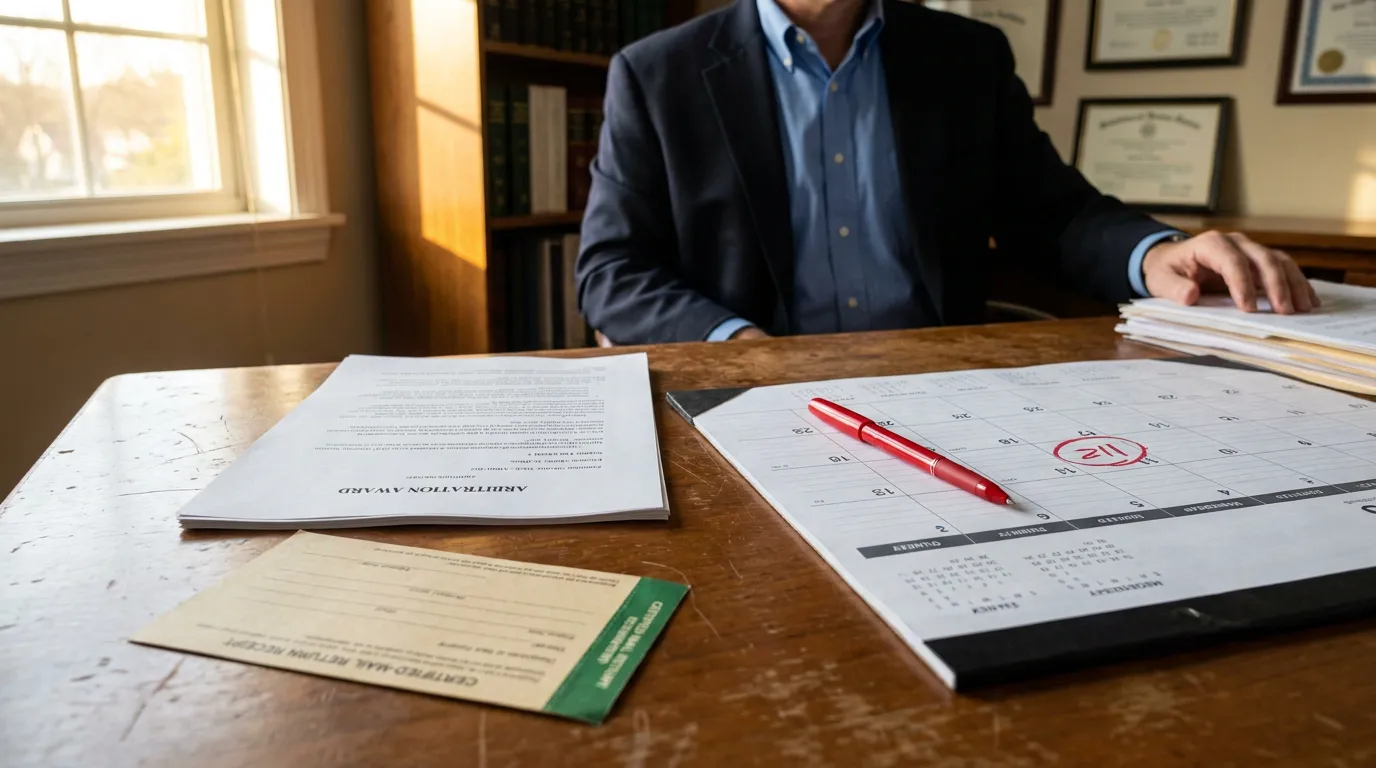
In most cases, you have 30 days after the arbitration award is filed with the circuit court clerk to file a notice of rejection. Under Illinois Supreme Court Rule 93(a), that window is short and generally enforced strictly. If no party rejects in time, any party may ask the court to enter judgment on the award under Illinois Supreme Court Rule 92(c), and the case generally ends there.
If you recently received an arbitration award in a car accident case, the time to act is now. McDevitt and Cobb P.C. can review your award and help you understand your options before the deadline passes. Call 312-332-0072 or contact us now to talk about your case.
How Illinois Mandatory Arbitration Works in Car Accident Cases
Illinois mandatory arbitration is a court-annexed program that sends certain civil cases seeking money damages below a set limit to a panel of arbitrators before trial. The program is created by statute in Part 10A of Article II of the Code of Civil Procedure (735 ILCS 5/2-1001A et seq.), and its procedures come from Illinois Supreme Court Rules 86 through 95. DuPage County’s 18th Judicial Circuit runs an approved program, so those statewide rules apply there. The circuit’s local rules set the dollar limit for qualifying cases, up to the maximum allowed by Supreme Court Rule 86(b).
The program is paid for partly through civil filing fees. Under the Clerks of Courts Act, 705 ILCS 105/27.1b, part of the civil filing or appearance fees collected in counties outside Cook County, including DuPage, may go to the State’s Mandatory Arbitration Fund. The hearing is usually quicker and less formal than a trial.
Why Arbitration Is Not Always the Final Word
A mandatory arbitration award is not binding if a party rejects it on time. That is the main difference between court-annexed arbitration and private, contract-based arbitration. If you reject on time, you generally keep your right to a trial, unless you have been barred from rejecting, for example for failing to take part in the hearing in good faith. If no party rejects, the award can become a binding judgment.
The 30-Day Rejection Deadline Under Illinois Supreme Court Rule 93
Illinois Supreme Court Rule 93(a) gives any party who was present at the arbitration hearing, in person or through counsel, 30 days after the award is filed to file a written notice of rejection and request a trial. The clock starts when the award is filed with the clerk, not when you get a copy in the mail. This rule applies statewide, including in Chicago and Cook County, since all approved mandatory arbitration programs follow the same statewide rules. If one party files a timely rejection, that single rejection is enough to let all other non-debarred parties proceed to trial on all issues without each having to file a separate notice of rejection.
The appellate court has made clear that missing this deadline can be fatal to a case. In Illinois Appellate Court order No. 1-17-1415, a nonprecedential Rule 23 order, the court explained that a trial court does not have to excuse a late filing just because a party says it was an accident, and does not abuse its discretion when it refuses a late rejection blamed on inadvertent error. You can read the court’s reasoning in this Rule 23 appellate order.
💡 Pro Tip: Put the 30th day on your calendar the same day the award is filed, and plan to file several days early. Holidays, clerk office closures, and e-filing problems can leave much less time than you think.
The Rejection Fee
Rejecting an award generally requires paying a fee to the circuit court clerk. Under Rule 93(a), the fee is $200 if the award was $30,000 or less and $500 if it was more. A party who qualifies as indigent may be able to have the fee waived. Confirm the current figures with the DuPage County Circuit Clerk before you file.
| Item | General Rule | Source |
|---|---|---|
| Rejection deadline | 30 days after award is filed | Ill. S. Ct. R. 93(a) |
| Fee (award of $30,000 or less) | $200 | Ill. S. Ct. R. 93(a) |
| Fee (award over $30,000) | $500 | Ill. S. Ct. R. 93(a) |
| No timely rejection | Judgment may be entered on award | Ill. S. Ct. R. 92(c) |
| After rejection | New trial before judge or jury | Ill. S. Ct. R. 93 |
Navigating a DuPage County Mandatory Arbitration Car Accident Award
When an award arrives, your first task is deciding quickly whether the amount is fair. Some plaintiffs accept a reasonable award to avoid the cost and delay of trial. Others reject an award that does not cover their medical bills, lost wages, or long-term injuries. The right choice depends on the facts, the evidence, and the risks of trial.
Several questions can help guide that decision:
- Does the award cover your documented medical expenses and future treatment?
- Did the arbitrators have all of your evidence, including medical records and wage loss documents?
- Could a jury reasonably reach a higher or lower number?
- Is the other side likely to reject the award if you accept it?
- Can you pay the rejection fee and handle the time a trial will take?
Local Rules Matter Too
DuPage County’s local court rules add to the statewide Supreme Court Rules. In the 1-17-1415 case, the plaintiff missed a deadline under a Cook County local rule while arguing that she had met the 30-day Rule 93 deadline. If your case is in DuPage, Will, Kankakee, or Winnebago County, check both Rule 93 and the local rules of the circuit court handling your case.
Rejection Is Usually the Only Remedy
Under Illinois’s mandatory arbitration rules, a timely rejection is generally the only way to challenge an award. In Illinois Appellate Court opinion No. 1-11-1090, the court discussed the Committee Comments to Rule 93, which show that the Supreme Court meant rejection to be the exclusive remedy. According to the court, that may hold even when an award might be voidable, for example because the arbitrators went beyond their powers.
This means a car accident plaintiff usually cannot ask the court to vacate the award the way a party might under the Uniform Arbitration Act. The appellate court explains that limit in its analysis of the exclusive remedy. Filing a separate motion instead of a timely notice of rejection can cost you your right to trial.
💡 Pro Tip: Under Rule 91, a party who does not take part in the arbitration hearing in good faith and in a meaningful way can be barred from rejecting the award. Showing up prepared, with your evidence and witnesses, helps protect your right to reject later.
What Happens After Rejecting an Arbitration Award in Illinois
After a timely rejection, the case generally goes to trial before a judge or jury, and that trial starts over from the beginning. As summarized in the 19th Judicial Circuit’s arbitration booklet, Rule 93(b) bars calling the arbitrator as a witness at that trial. It also bars any mention of the arbitration award, so the judge or jury decides the case without knowing what the panel awarded.
A car accident trial in Illinois carries real risk. A jury could award more than the arbitrators did, less, or nothing at all. Trials also generally take more time, preparation, and money than arbitration hearings. Talking with a DuPage County car accident lawyer can help you weigh those risks against the award you already have.
Common Mistakes That Put Your Case at Risk
The most common mistake is assuming there is more time than there is. Plaintiffs sometimes wait to see whether the defense rejects first, or they count from the day they received the award instead of the filing date. Others file the notice but forget the fee or a local procedural requirement.
Mistakes like these can be hard to fix once the deadline passes. Courts generally have discretion to refuse late filings, and saying it was an inadvertent error may not be enough. To learn more about how Illinois injury claims move through the courts, explore more car accident lawsuit guides on our site.
Frequently Asked Questions
1. When does the 30-day rejection period start?
The period starts when the award is filed with the circuit court clerk. It does not start when you receive the award.
2. What happens if no one rejects the award?
Any party may ask the court to enter judgment on the award under Rule 92(c). The case then generally ends, and the parties are bound by the arbitrators’ decision.
3. Can a court accept a late notice of rejection?
Courts have some discretion, but they do not have to excuse a late filing. Refusing a late rejection blamed on inadvertent error is not an abuse of discretion.
4. Will the jury learn about the arbitration award?
No. Rule 93(b) bars any mention of the award at trial. It also bars calling the arbitrator as a witness.
5. Can I ask the court to vacate an unfair award instead of rejecting it?
Generally, no. Illinois courts have treated a timely rejection as the exclusive remedy against a mandatory arbitration award, even when the award might be voidable.
Protecting Your Right to Trial After Arbitration
The 30-day rejection deadline is one of the strictest timelines in a DuPage County mandatory arbitration car accident case. Under Illinois Supreme Court Rule 93, you generally must file a written rejection and pay the required fee within 30 days after the award is filed, or judgment may be entered on the award.
If an arbitration award in your car accident case is not what you expected, you do not have to sort out your options alone. McDevitt and Cobb P.C. represents injured people throughout DuPage, Will, Kankakee, and Winnebago counties. Call 312-332-0072 or schedule your consultation today so we can review your award before the deadline passes.
Disclaimer: This content is for informational purposes only and is not legal advice. Every case is unique, and results may vary. Consult an attorney about your specific circumstances.