When a Bar’s Service Becomes Part of Your Injury Claim
Key Takeaways: Illinois’ Dram Shop Act, 235 ILCS 5/6-21, permits injured parties to bring statutory claims against licensed establishments whose sale or gift of alcohol caused a driver’s intoxication, without proving bartender negligence. The claim carries a one-year filing deadline written into the statute, far shorter than the two-year period for ordinary injury actions, requiring quick preservation of receipts and surveillance video. Recovery is capped by annually adjusted limits that apply collectively across multiple establishments and to all family members claiming loss of society or support. The intoxicated person cannot recover for their own injuries, and comparative negligence does not apply, though defenses like complicity exist. A separate statute, 740 ILCS 58/5, imposes liability on adults who willfully furnish alcohol to minors with a two-year filing period, while dram shop recovery counts as a collateral source in crime victim compensation.
After a DuPage County drunk driving crash, the intoxicated driver is rarely the only party with potential legal responsibility. Illinois law allows injured people to bring separate claims against licensed establishments that served the alcohol causing that driver’s intoxication. This remedy is narrow, deadline-sensitive, and capped by statute, making early legal guidance important.
If you were hurt by an impaired driver in Naperville, Wheaton, Downers Grove, or anywhere in DuPage, Will, Kankakee, or Winnebago County, the team at McDevitt and Cobb P.C. can evaluate whether a liquor liability claim may be available alongside your negligence case. Call 312-332-0072 to discuss what happened, or reach out to our team now to schedule a conversation.
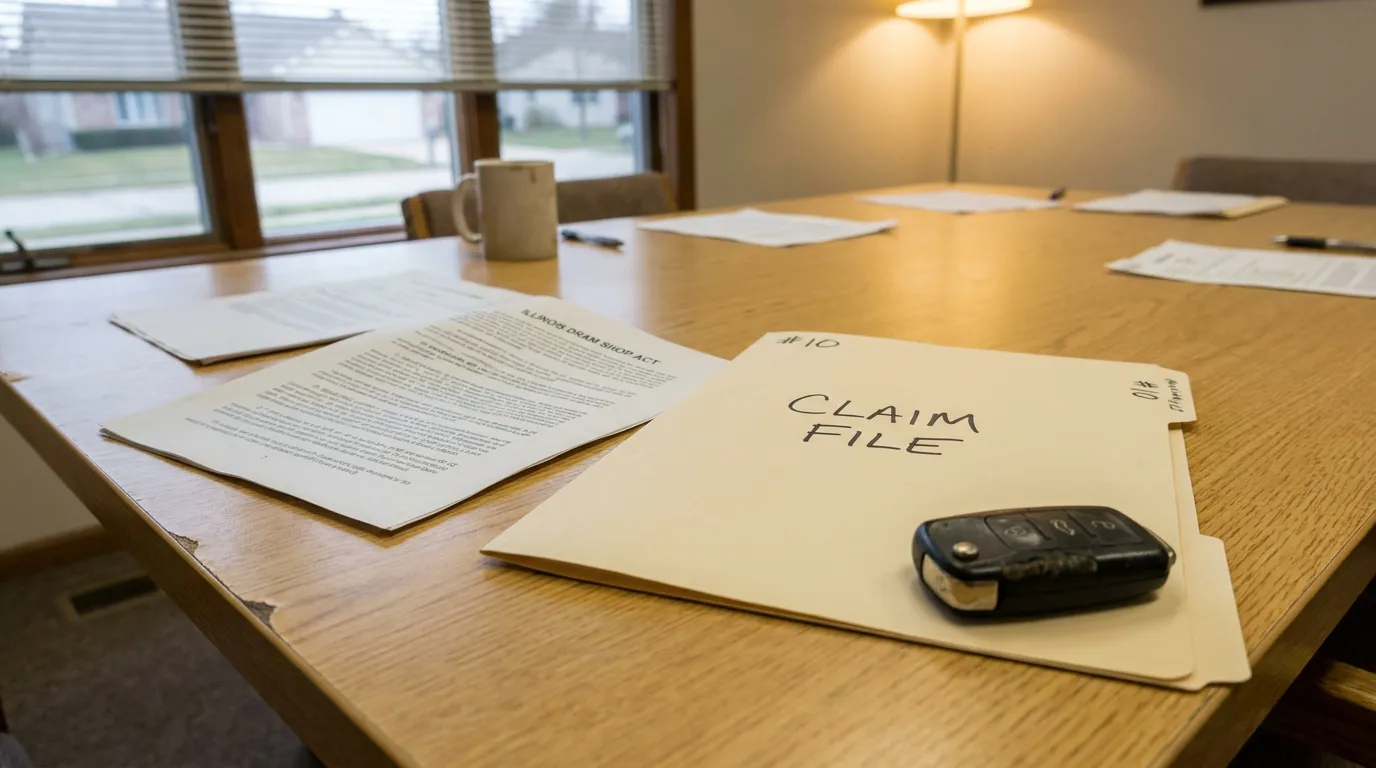
What the Illinois Dram Shop Act 235 ILCS 5/6-21 Actually Provides
Section 6-21 of the Illinois Liquor Control Act creates a remedy for people who suffer injuries from an intoxicated person’s actions. The statute applies to those who, by selling or giving alcoholic liquor, cause another’s intoxication when that intoxication injures a third person or damages property. This reaches bars, taverns, restaurants, and similar licensees, and extends liability to property owners who knowingly lease premises for retail alcohol sales.
This is a statutory cause of action rather than ordinary negligence, and that distinction matters significantly. Plaintiffs need not prove the bartender was careless or knew the customer was visibly drunk. Instead, the focus is whether the defendant sold or gave alcohol that caused the intoxication, and whether that intoxication proximately caused the injury. Because the claim is purely statutory, Illinois courts construe it strictly and have declined to extend it beyond what the legislature wrote, including refusing to recognize parallel common-law negligence claims against alcohol providers.
Historically, American law imposed few liquor liability rules. As legal publishers explaining dram shop laws in Illinois describe, the prevailing view was that alcohol-related accidents were caused by drinking rather than selling alcohol, leaving injured parties with recourse only against the intoxicated individual.
The One-Year Deadline That Catches Victims Off Guard
The most commonly missed feature is the shortened filing window. Section 6-21 requires actions to commence within one year after the cause accrues, materially shorter than the two-year period governing personal injury actions under 735 ILCS 5/13-202. An injured person may still have time to sue the drunk driver while the bar claim has expired.
Exceptions and tolling doctrines exist but courts interpret them narrowly. Because the one-year period is built into the statute creating the right, Illinois courts have treated it as a condition on the claim itself, and general tolling principles cannot be assumed to apply. Any exception is fact-dependent and often contested. Treat the one-year date as firm.
💡 Pro Tip: Ask investigators or your attorney to preserve receipts, tabs, point-of-sale records, and surveillance footage from the establishment early. Many bars overwrite video within weeks, and that evidence often becomes central to proving where the driver was served.
How Damages Are Capped and Adjusted Each Year
Recovery under the Act is limited by annually adjusted statutory caps. Section 6-21(a) requires the Illinois Comptroller to determine yearly liability limits according to the Consumer Price Index for urban consumers. The applicable figure depends on when the cause of action accrued.
Separate caps apply to different loss categories. For claims arising on or after January 20, 2019, damages for injury, death, or property damage were capped at $70,091.09 per person, while loss of means of support or society claims were capped at $85,666.89. Those figures are illustrative; confirm the Comptroller’s published figures for your claim year.
| Category of Claim | Cap for Claims On or After Jan. 20, 2019 |
|---|---|
| Injury, death, or property damage | $70,091.09 per person |
| Loss of means of support or society | $85,666.89 |
Collective Liability Across Multiple Establishments
When multiple dram shops are potentially liable, statutory limits apply to their collective liability. If an intoxicated driver visited three taverns before a crash, the cap is not multiplied. This aggregation rule frequently surprises claimants. The cap does not limit what an injured person may separately recover from the intoxicated driver.
One Aggregate Claim for Loss of Society
Loss of society and support claims are aggregated regardless of how many people claim. If a parent is killed, surviving children share one aggregate claim for loss of society or support. Families pursuing wrongful death recovery should understand this limitation.
Who Cannot Recover
Illinois courts hold that the intoxicated person has no cause of action for their own injuries. Neither contributory nor comparative negligence is recognized in dram shop actions, though defendants may raise defenses such as complicity, where the plaintiff materially contributed to the person’s intoxication, and provocation. Punitive damages are unavailable under the Act. These features distinguish dram shop cases from ordinary motor vehicle injury claims.
A Separate Statute for Adults Who Supply Alcohol to Minors
Illinois imposes civil liability outside the Dram Shop Act on adults who willfully furnish alcohol to minors. Under 740 ILCS 58/5(a)-(b), any person at least 18 years old who willfully supplies alcoholic liquor to a person under 18 and thereby causes impairment may be liable for resulting death, injury, or property damage, with injured parties holding rights of action including reasonable attorney’s fees. This matters when the impaired driver was an underage drinker served at a private party. This statute reaches only those under 18.
The deadline under this statute differs. Under 740 ILCS 58/5(c), actions for damages are barred unless commenced within two years. Plaintiffs must track carefully which law applies because filing windows differ.
How Crime Victim Compensation Interacts With a Dram Shop Recovery
Dram shop recovery is treated as a collateral source in the state compensation process. Under 740 ILCS 45/7.1(a)(7), crime victim compensation applications must set out amounts payable under sources including the Dram Shop Act. Because the program pays only for losses not covered elsewhere, that disclosure can reduce net compensation available.
This administrative process follows its own rules and timelines. Filing for crime victim compensation does not substitute for civil claims, and pursuing civil claims does not automatically disqualify you from the program. Coordinating these tracks thoughtfully is advisable.
Practical Steps After an Alcohol-Related Crash in DuPage County
Building a viable bar liability claim usually depends on evidence gathered in the first weeks. The following steps help preserve potential claims:
- Obtain the crash report and DUI arrest documentation, including chemical test results
- Identify every establishment the driver visited using credit card records, social media, or witness accounts
- Send preservation requests for video, receipts, and server records before routine destruction
- Document your injuries, treatment, and lost income consistently
- Note the crash date prominently, given the shortened filing period
Coordination between negligence and statutory claims requires planning. Knowing what to expect when filing an MVA claim helps injured people understand how insurance negotiations, medical documentation, and litigation deadlines fit together.
💡 Pro Tip: If the driver’s insurance limits are low, a dram shop claim may be one of the few remaining avenues for meaningful recovery, subject to the statutory caps.
Frequently Asked Questions
1. Can I sue a bar directly for a DuPage County drunk driving crash?
Under the illinois dram shop act 235 ilcs 5/6-21, injured third parties may bring claims against licensed establishments whose sale or gift of alcohol caused the driver’s intoxication. Viability depends on proof of service, causation, and timely filing within one year.
2. Does Illinois recognize social host liability?
Illinois generally does not impose common-law social host liability on adults who serve alcohol to other adults. However, 740 ILCS 58/5 provides civil remedy against adults who willfully supply alcohol to persons under 18.
3. What if the drunk driver was also injured?
Illinois case law holds that the intoxicated person has no cause of action for their own injuries under the Act, regardless of how the accident occurred.
4. Are the damage caps negotiable?
The caps are statutory and adjusted annually by the Illinois Comptroller based on CPI-U. They cannot be waived by agreement, though the applicable year and category of loss affect the number. The cap does not limit recovery from the intoxicated driver.
5. Do I need a separate attorney for the dram shop portion?
No. A single claim can address both the negligence action against the driver and the statutory action against the licensee, provided the shorter dram shop deadline is met.
Protecting Your Rights Before the Clock Runs Out
Illinois liquor liability law offers real recourse to people hurt by intoxicated drivers, but with strict boundaries. The shortened filing period, annually adjusted caps, aggregation rules, available defenses, and separate statute for supplying alcohol to minors all shape what a claim is worth. Because these rules are fact-dependent and interpreted narrowly by Illinois courts, general information cannot substitute for reviewing your specific circumstances.
If an impaired driver injured you or your family, McDevitt and Cobb P.C. is prepared to evaluate every recovery avenue available under Illinois law. Call 312-332-0072 or contact us today to discuss your case before critical deadlines pass.