Untangling Fault After an Uber or Lyft Wreck on I-88
Key Takeaways: Determining liability for a rideshare crash on Interstate 88 in DuPage County depends on which insurance phase the driver was in at impact and how fault is divided under Illinois law. Illinois treats Uber and Lyft as intermediaries rather than vehicle owners under the Transportation Network Providers Act, with a primary $1,000,000 policy applying during active rides (Phase 3). Liability may fall on the rideshare driver, another motorist, the TNC, or multiple parties. Fault is apportioned under Illinois modified comparative negligence, where parties more than 50% at fault are barred from recovery, while lesser fault reduces damages proportionally. Strict deadlines apply, generally two years for personal injury claims but as little as one year when a government entity is involved.
Determining liability for a rideshare crash on Interstate 88 in DuPage County depends on which insurance phase the driver was in and how fault is divided under Illinois law. Liability may fall on the rideshare driver, another motorist, the Transportation Network Company (TNC), or a combination of parties. Because Illinois classifies companies like Uber and Lyft as intermediaries rather than vehicle owners, the analysis turns heavily on statute and collision facts.
If you were hurt in a rideshare collision along I-88, the team at McDevitt and Cobb P.C. is ready to help. Call our office at 312-332-0072 or reach out through our contact page to request a case review. Acting promptly helps preserve evidence and meet legal deadlines.
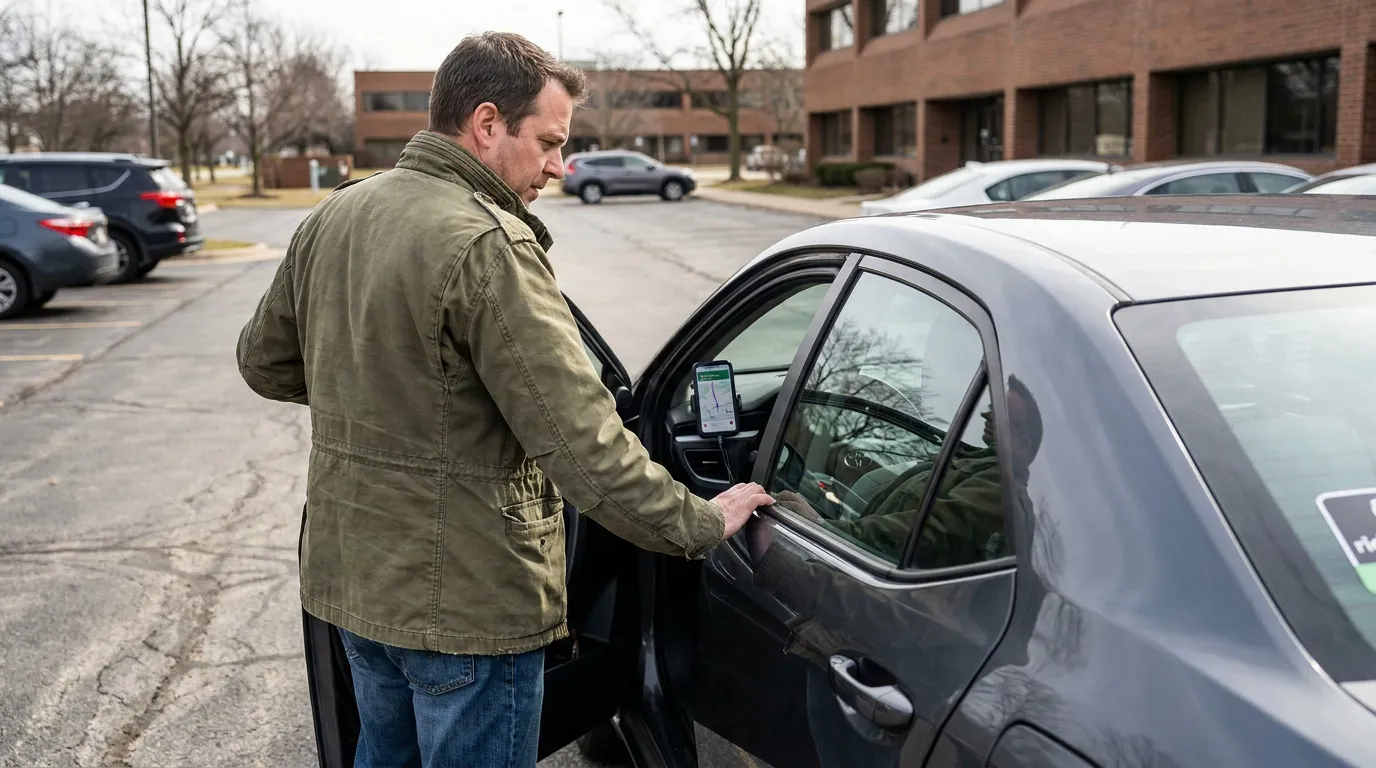
Why Rideshare Companies Are Treated Differently in Illinois
Illinois law does not treat Uber or Lyft like a traditional employer. Under the Illinois Transportation Network Providers Act, a TNC is defined as an entity that uses a digital network or app to connect passengers with drivers, and the statute expressly states that a TNC "is not deemed to own, control, operate, or manage the vehicles used by TNC drivers" (625 ILCS 57/5). This independent contractor classification is central to disputes over whether the company bears direct vicarious liability or only an insurance obligation.
That distinction shifts much of the liability question onto insurance coverage rather than employer responsibility. The statute defines when TNC services "begin when a TNC driver accepts a request for transportation" and "end when the passenger exits the TNC driver’s vehicle" (625 ILCS 57/5). This timeline decides which coverage phase applies. Review the full text through the Illinois Transportation Network Providers Act.
💡 Pro Tip: Save a screenshot of your ride status in the app immediately after a crash. It can serve as important evidence of which insurance phase was in effect at impact.
The Three-Phase Insurance Framework That Shapes Liability
Illinois creates a three-phase insurance structure that governs coverage at any given moment. Each phase carries different minimum requirements, and the phase in effect during your crash often drives the entire liability discussion. The table below summarizes the general structure under 625 ILCS 57/10(b)-(c).
| Phase | Driver Status | General Coverage Requirement |
|---|---|---|
| Phase 1 | App off | Driver’s personal auto insurance applies |
| Phase 2 | App on, no ride accepted | At least $50,000 per person / $100,000 per incident for injury; $25,000 property damage |
| Phase 3 | Ride accepted through passenger exit | Primary $1,000,000 liability policy |
During Phase 2, the TNC must provide contingent coverage if the driver’s personal policy excludes it. If the driver’s personal insurer denies coverage while the app is on but no ride is accepted, the company’s contingent policy steps in to meet statutory minimums.
In Phase 3, protections for injured victims are strongest. A primary $1,000,000 liability policy applies during an active ride. Because the policy is primary, an injured victim does not need to exhaust the driver’s personal auto policy first, since coverage "shall not be dependent on a personal automobile insurance policy first denying a claim" (625 ILCS 57/10(c)(4)).
Two additional protections often surprise crash victims. First, once a passenger is in the vehicle, Illinois mandates uninsured and underinsured motorist coverage of at least $50,000 (625 ILCS 57/10(c)(2)). Second, if a driver’s personal insurance has lapsed, the TNC must provide required coverage "beginning with the first dollar of a claim" (625 ILCS 57/10(d)).
What a Motor Vehicle Accident Lawyer in Chicago Can Clarify About TNC Duties
A motor vehicle accident lawyer in Chicago can help you understand the difference between an insurer’s duty and a company’s broader liability. During an active ride, the TNC insurer has a statutory duty to defend and indemnify the insured, meaning the insurer "shall have the duty to defend and indemnify" under 625 ILCS 57/10(c)(3). In practical terms, Uber or Lyft’s insurer generally cannot simply deny a claim and walk away when Phase 3 applies.
Statutory minimums do not cap what an injured person may recover. Illinois law expressly preserves the right to sue a TNC for damages above required insurance coverage, providing that the section does not limit liability "for an amount above the required insurance coverage" (625 ILCS 57/10(e)). For serious injuries from high-speed interstate crashes, that provision can be significant. Learn more through our rideshare accident lawyer DuPage County resource.
💡 Pro Tip: Keep every medical record, bill, and mileage log related to your injuries. Documentation of damages above minimum coverage limits can support a claim for full compensation.
How Fault Is Divided Under Illinois Comparative Negligence
Fault in an Illinois rideshare crash is governed by the state’s modified comparative negligence standard. This rule, codified at 735 ILCS 5/2-1116, is the authoritative basis for how fault is divided among drivers, rideshare companies, and other parties.
Under this standard, an injured party can recover only if found 50% or less at fault. A plaintiff whose fault is more than 50% is barred from any recovery, and a party who is partially at fault has damages reduced proportionally. Read the statutory language directly through the Illinois comparative negligence statute.
This 50% bar rule directly affects who ultimately pays after an I-88 collision. If a passenger, a rideshare driver, and a third motorist all share some responsibility, each party’s percentage can shift the balance of recovery. That is why careful investigation of the crash scene, vehicle data, and witness accounts often proves valuable.
Deadlines and Government Claims You Cannot Afford to Miss
Illinois sets firm time limits for filing an injury claim, and missing them can end a case before it begins. For personal injury, actions "shall be commenced within 2 years next after the cause of action accrued" under 735 ILCS 5/13-202. This two-year window generally applies to injured rideshare passengers and drivers.
Claims involving a government or public entity follow different and shorter rules:
- Local public entities: a one-year limitations period under 745 ILCS 10/8-101
- Illinois state actions: a one-year period under 705 ILCS 505/22-1
- State claims may require filing a statement with the Illinois Attorney General and Court of Claims including the injured person’s name, residence, and accident details
These shortened deadlines can arise when a road authority on I-88 is a potential defendant. Because a public entity may share liability for dangerous road conditions, the one-year window can apply alongside the two-year civil deadline. If unsure which deadline governs, review your rights promptly. Knowing what to do immediately after a car crash in Illinois can help preserve evidence.
💡 Pro Tip: Do not wait for an insurance company to tell you your deadline. Confirm the applicable limitations period early, because government claim deadlines can expire in as little as one year.
Frequently Asked Questions
1. Who pays if my Uber driver caused a crash while I was a passenger on I-88?
During an active ride, the TNC’s primary $1,000,000 liability policy generally applies. Under 625 ILCS 57/10(c), that coverage is primary and does not depend on the driver’s personal insurer denying a claim first.
2. Can the rideshare company itself be sued, not just its insurer?
Yes, Illinois law preserves the right to sue a TNC for damages above required insurance limits. Under 625 ILCS 57/10(e), the insurance floors do not cap total recovery. Whether direct company liability applies depends on your case’s specific circumstances.
3. What if the at-fault driver had no insurance?
Once a passenger is in the vehicle, uninsured and underinsured motorist coverage of at least $50,000 applies. This requirement under 625 ILCS 57/10(c)(2) can allow an injured passenger to recover even when an uninsured driver caused the crash.
4. How long do I have to file a rideshare injury claim in Illinois?
Most personal injury claims must be filed within two years under 735 ILCS 5/13-202. If a public entity is involved, a one-year deadline may apply instead. These deadlines are strict, and exceptions are interpreted narrowly.
5. Will my own fault reduce what I can recover?
It may, depending on your assigned percentage of fault. Under 735 ILCS 5/2-1116, recovery is reduced proportionally to your fault and barred entirely when your fault exceeds 50%. Fault is determined based on specific evidence in each case.
Protecting Your Recovery After a DuPage County Rideshare Crash
Liability for a rideshare crash on Interstate 88 rarely comes down to a single answer. It depends on the insurance phase at impact, how fault is apportioned under Illinois comparative negligence, whether a public entity shares responsibility, and which filing deadline applies. Because these questions are fact-sensitive, outcomes vary, and general information is not a substitute for advice about your particular situation.
If you or a loved one was injured in a rideshare collision in DuPage, Kankakee, Will, or Winnebago County, the attorneys at McDevitt and Cobb P.C. are prepared to guide you through each step. Call us today at 312-332-0072 or request your consultation online to learn how Illinois rideshare and insurance laws may apply to your claim.