A Clean Scan Can Hide a Real Brain Injury
Key Takeaways: A normal CT scan does not always mean you have no concussion claim. ER scans mainly look for bleeding, fractures, and swelling, not the changes in how the brain works that a concussion causes. One Illinois statute defines a head injury by how it affects a person’s mental, cognitive, behavioral, or physical functioning, not by what shows up on imaging. Without a positive scan, you may still support a claim with follow-up treatment, memory and balance testing, symptom journals, witness statements, and work records. Insurers often rely on a negative scan and their own medical exams, so tell every provider about every symptom. Settlement value may depend on symptom duration, medical treatment, lost income, insurance limits, and Illinois’s modified comparative fault rule. You must file most Illinois personal injury claims within two years, and a normal scan generally does not pause that deadline.
A normal CT scan does not, by itself, mean you have no concussion claim. ER doctors mainly use CT scans to look for urgent problems like bleeding, skull fractures, or swelling. A concussion, or mild traumatic brain injury, usually affects how the brain works rather than how it looks on a scan. If you still have headaches, memory problems, dizziness, or mood changes after an Illinois car accident, your symptoms and medical records may support a claim even though your scan came back "negative."
If a crash in DuPage, Will, Kankakee, or Winnebago County left you with symptoms your scan did not explain, McDevitt and Cobb P.C. can review your situation and explain your options. Call 312-332-0072 or contact us now to talk about your next steps.
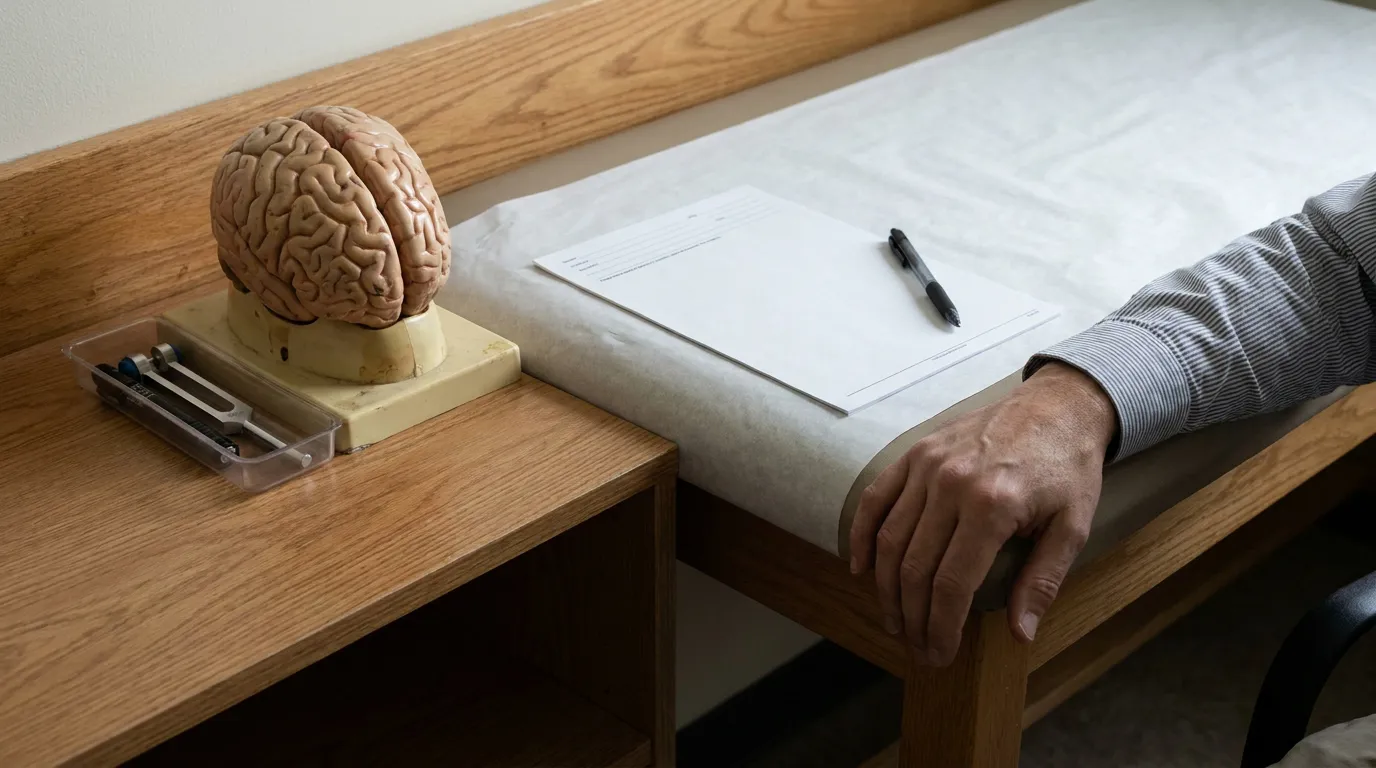
What a CT Scan Can and Cannot Show After a Crash
An ER CT scan answers one narrow question: is there a physical injury that needs treatment right away? Doctors order it to rule out life-threatening problems such as a brain bleed or fracture. It is not built to detect the tiny damage and chemical changes that often happen in a concussion.
That is why many people leave the hospital with a "normal" report and still feel wrong days later. Symptoms often appear or worsen as the person returns to work, driving, or screen time.
Why Insurers Focus on the Scan
Adjusters often treat a normal CT scan as their best argument against a concussion claim. Their reasoning: if the scan shows nothing, the injury must be minor or made up. That ignores how doctors actually diagnose concussions, and strong medical records can help you challenge it.
How Illinois Law Defines a Head Injury
At least one Illinois statute defines a head injury by its effects on the person, not by what appears on a scan. Under the Head and Spinal Cord Injury Act, 410 ILCS 515/1(b), a "head injury" means sudden damage to the brain or its coverings, not caused by a degenerative disease, that alters consciousness or temporarily or permanently impairs mental, cognitive, behavioral, or physical functioning. The definition does not require a visible bleed, fracture, or other abnormality on a CT or MRI.
The statute covers both temporary and permanent impairment. That matters for crash victims whose problems last for weeks or months. This section only sets definitions for a state reporting and health program. It does not set the legal standard for proving a personal injury claim, but it shows how Illinois describes brain injury in its own law.
Other Illinois Statutes That Recognize Concussion Symptoms
Illinois law lists the signs of a concussion as symptoms, not scan results. Under 410 ILCS 145/15, which covers concussion education for youth sports, signs include loss of consciousness, headache, dizziness, confusion, and balance problems. That law concerns student athletes, but the list fits what many adults feel after a crash.
The General Assembly has also named "traumatic brain injury and post-concussion syndrome" as a debilitating medical condition. This appears in the Compassionate Use of Medical Cannabis Program Act, 410 ILCS 130/10. That law does not address injury compensation, but it shows Illinois treats post-concussion syndrome as a serious medical condition.
Building Concussion Claim Evidence Without a Positive Scan
When the scan is normal, the claim generally depends on everything else in the record. Proof often comes from consistent symptoms, follow-up treatment, and tests that measure how well your brain works.
Helpful evidence can include:
- Follow-up visits with your primary care doctor, a neurologist, or a concussion clinic
- Neuropsychological testing that measures memory, attention, and processing speed
- Vestibular (inner ear) or balance testing for dizziness and coordination problems
- A daily symptom journal noting headaches, sleep problems, light sensitivity, and mood changes
- Statements from family, friends, or coworkers who noticed changes in you
- Work records showing missed time, fewer hours, or performance problems
💡 Pro Tip: Tell every provider about every symptom, even ones that seem small or embarrassing, like irritability or trouble finding words. Insurers often point first to gaps in your medical records.
Why the Police Report May Understate Your Injury
The crash report may not mention a brain injury at all. Under the Rights of Crime Victims and Witnesses Act, 725 ILCS 120/3, a "Type A" injury on a traffic crash report includes severely bleeding wounds, distorted limbs, and injuries that require someone to carry the person from the scene. That definition does not set the standard for civil claims, but it shows that crash reports tend to focus on visible injuries. If you walked away from the crash, your later medical records become even more important.
Preparing for an Insurance Medical Exam
The insurer may ask you to see a doctor it chooses. In a lawsuit, the defense may ask the court to order an exam, and your own policy may require one for certain benefits. Learning how an independent medical exam works in an Illinois case can help you prepare and avoid common mistakes.
Factors That Affect a Post Concussion Syndrome Car Accident Settlement
The value of a post concussion syndrome car accident settlement depends on the facts of each case. No lawyer can honestly promise a specific result. Courts and insurers may consider several factors.
| Factor | Why It May Matter |
|---|---|
| How long symptoms last | Longer-lasting symptoms may support higher damages |
| Medical treatment | Steady care may help link symptoms to the crash |
| Lost income | You may claim missed work and reduced earning ability |
| Shared fault | Your recovery may be reduced or barred |
| Available insurance | Policy limits can cap what you can realistically collect |
Illinois follows a modified comparative fault rule. Under 735 ILCS 5/2-1116, if you are more than 50% at fault for your injury, you cannot recover damages. If you are 50% or less at fault, your damages are reduced by your share of fault.
Rideshare Crashes and Insurance Limits
If you were hurt in or by an Uber or Lyft, more coverage may apply. Under the Transportation Network Providers Act, 625 ILCS 57/10(b), a driver who is logged into the app and waiting for a ride request must carry at least $50,000 per person and $100,000 per incident in liability coverage for death and personal injury, plus $25,000 for property damage. Under 625 ILCS 57/10(c)(1), from the moment a driver accepts a ride request until the ride is complete, $1,000,000 in primary liability coverage applies. Under 625 ILCS 57/10(c)(2), a separate $50,000 in uninsured and underinsured motorist coverage applies specifically from the moment a passenger enters the vehicle until the passenger exits it, a narrower window than the full ride period. These rules may change, so check the current statute.
Illinois Filing Deadlines Do Not Wait for a Diagnosis
Illinois generally requires you to file a personal injury lawsuit within two years of the date the claim arose. This rule comes from 735 ILCS 5/13-202, and the Illinois statutes of limitations generally apply to brain injury claims just as they do to other injuries. In a car accident case, the clock usually starts on the date of the crash, and a normal CT scan generally does not pause that deadline.
Some exceptions exist, but courts read them narrowly. In limited cases, such as when the injured person is a minor or legally disabled, 735 ILCS 5/13-211 may pause the deadline. Claims against local government bodies, such as a city bus or county truck, generally must be filed within one year under 745 ILCS 10/8-101, and claims against the State may have their own rules. Waiting for a "final" diagnosis can put your claim at risk.
💡 Pro Tip: Keep copies of your ER discharge papers and every follow-up record in one folder. Organized records make it easier to show when symptoms began and how they changed.
Frequently Asked Questions
1. Can I have a concussion if my CT scan was normal?
Yes. CT scans mainly detect bleeding, fractures, and swelling. Many concussions do not show up on standard scans, and doctors generally diagnose them based on symptoms and exams.
2. Will the insurance company deny my claim because of a negative scan?
It may try. Insurers often use a normal scan to argue the injury is minor. Steady treatment, testing, and documented symptoms may help you counter that argument.
3. How long do I have to file a concussion claim in Illinois?
Generally two years from the date of injury under 735 ILCS 5/13-202. Exceptions are limited, and claims against local government bodies generally have a one-year deadline.
4. What if I was partly at fault for the crash?
Under 735 ILCS 5/2-1116, you may still recover if you are 50% or less at fault, though your damages would be reduced by your share of fault. If you are more than 50% at fault, you cannot recover.
5. Should I see a doctor again even after the ER cleared me?
In many cases, yes. Follow-up care protects your health and creates the medical record a brain injury claim usually depends on.
Protecting Your Recovery After a Brain Injury No Scan Can See
A clean ER CT scan is only one part of your medical record. Illinois law describes head injuries in terms of impaired functioning, and post-concussion symptoms can be real, lasting, and costly even when a scan shows nothing. Steady treatment, careful records, and attention to filing deadlines can all affect your ability to pursue a post concussion syndrome car accident settlement.
If you have lingering symptoms after a crash in DuPage, Will, Kankakee, Winnebago County, or elsewhere in Illinois, a post concussion syndrome car accident settlement lawyer can help you understand where you stand. Learn more about how McDevitt and Cobb P.C. handles post concussion syndrome car accident settlement lawyer cases, call 312-332-0072, or schedule your consultation today.
Disclaimer: This content is for informational purposes only and is not legal advice. Every case is unique, and results may vary. Consult an attorney about your specific circumstances.