Building a Slip and Fall Case in Chicago That Holds Up
Building a strong Chicago slip and fall case starts with evidence that proves the property owner failed to use reasonable care, knew or should have known about the hazard, and caused your injuries. Illinois law gives injured visitors, tenants, customers and delivery workers a path to compensation, but property owners and their insurers often dispute every part of it. McDevitt and Cobb P.C. is a Chicago-based personal injury firm that represents injured people and families throughout Illinois. This guide explains how a premises liability claim is built, where these cases run into trouble, and what to look for in a firm.
If you or a loved one was hurt on someone else’s property, McDevitt and Cobb P.C. offers free case evaluations by phone or in person. Call 312-332-0072 or contact us now to talk about your fall with a responsive attorney.
The Legal Foundation Every Chicago Fall Claim Must Prove
Every Illinois slip and fall claim rests on one central question: did the owner or occupier use reasonable care? Under the Illinois Premises Liability Act, 740 ILCS 130/2, Illinois has abolished the old common-law distinction between invitees and licensees. Owners and occupiers now owe entrants who are not trespassers "reasonable care under the circumstances" regarding the state of the premises and acts done or omitted on them. Trespassers are governed by separate, more limited rules.
Illinois common law also sets limits on that duty, and insurers rely on them. Courts applying Section 2 generally hold that an owner’s duty does not include warning about conditions that are known to the visitor, open and obvious, or reasonably discoverable by the visitor. These limits, drawn from the Restatement (Second) of Torts Section 343A, also exclude latent defects the owner did not know about, or dangers caused by the visitor’s misuse of the premises. Illinois courts recognize exceptions to the open-and-obvious rule, including the "distraction" exception, which can apply when the owner should expect a visitor’s attention to be pulled away, and the "deliberate encounter" exception, which can apply when a visitor reasonably has to face the hazard anyway. A strong case therefore usually focuses on showing that the owner created the hazard or had actual or constructive notice of it, and that the hazard was not obvious or an exception applies.
Evidence That Proves Notice, Breach and Causation
Documentation often decides whether a premises liability claim moves forward. The firm’s lawyers have experience resolving claims both in and outside of the courtroom, and that work generally starts with gathering proof before it disappears. Useful evidence includes:
- Photos and video of the hazard, lighting and surrounding conditions
- Incident reports filed with the business, landlord or property manager
- Maintenance logs, inspection records and prior complaints
- Witness names and statements
- Medical records connecting your injuries to the fall
Causation and damages require their own proof. Insurers frequently argue that an injury came from a prior condition or was less serious than claimed. Consistent medical treatment and records help connect the fall to your losses. In cases involving defective stairs, railings or lighting, building code analysis and outside professional review may also be needed.
💡 Pro Tip: Keep the shoes and clothing you wore during the fall in a bag, unwashed. Footwear condition is a common defense topic, and preserving it can help answer questions about traction and fault.
Who May Be Responsible for Your Fall
More than one party can share responsibility for a dangerous condition. Owners, landlords, tenants operating a business, property management firms and maintenance contractors may each play a role, depending on who controlled the area. Our guide on liability for falls in Chicago businesses explains how responsibility can be divided in commercial settings. Identifying every responsible party early can affect the insurance coverage available.
When a Lease Says "Landlord Not Liable for Injury"
A lease clause claiming the landlord is not liable for injury caused by its negligence is generally void in Illinois. Under the Landlord and Tenant Act, 765 ILCS 705/1(a), any agreement in or connected with a lease that exempts the lessor from liability for injuries caused by the negligence of the lessor or its agents, servants or employees in operating or maintaining the premises is "void as against public policy and wholly unenforceable." A Chicago tenant injured in a poorly maintained stairway or common area may still bring a claim, though the tenant must prove the landlord was negligent.
There is one narrow exception. Under 765 ILCS 705/1(b), a non-residential lease may allocate liability for property damage between the parties, including through insurance and waiver-of-subrogation provisions. Commercial lease clauses that try to excuse the landlord’s negligence causing bodily injury remain void.
💡 Pro Tip: Do not let a landlord or property manager convince you that signing the lease waived your rights. Bring a copy of your lease to your case evaluation so an attorney can review it.
Snow, Ice and Chicago Sidewalk Falls
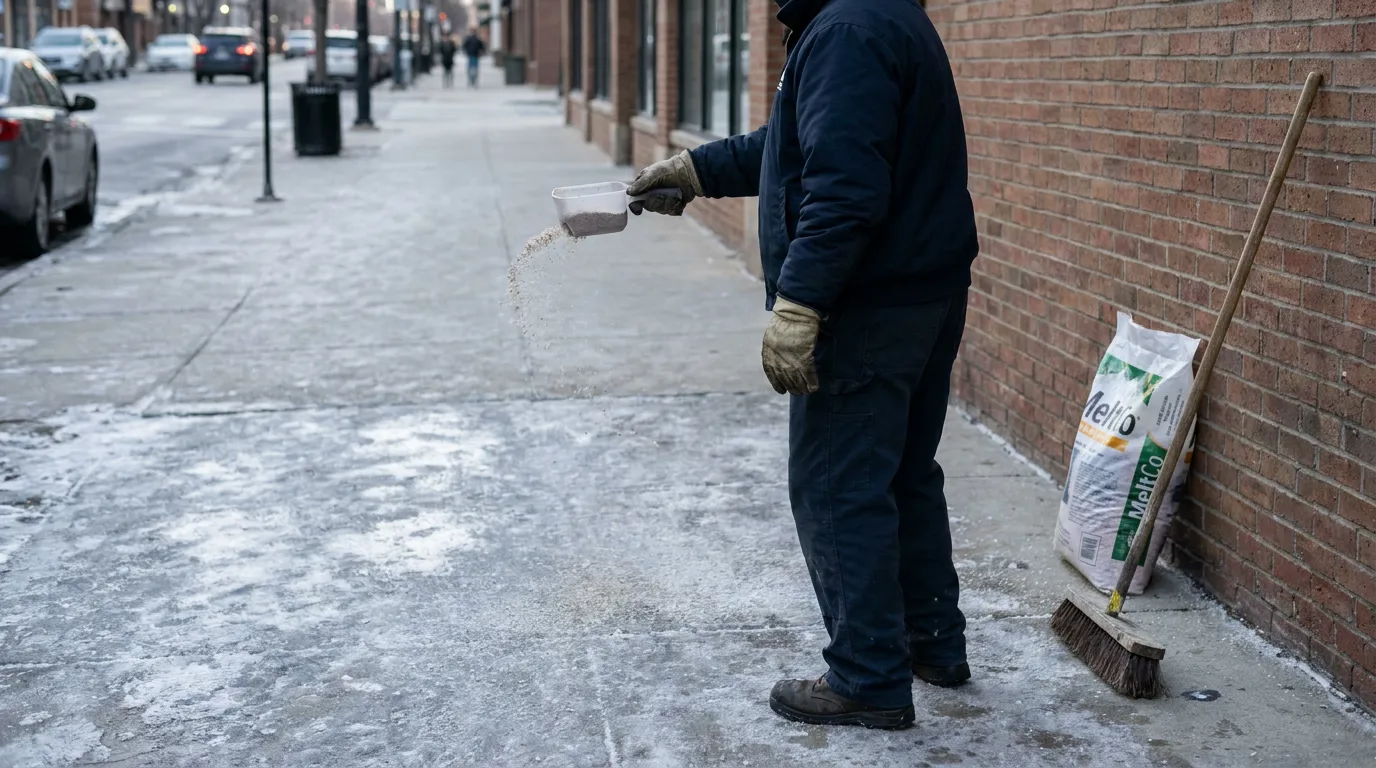
Snow and ice claims in Chicago follow special rules, and the type of property matters. Chicago’s municipal code requires property owners and occupants to clear snow and ice from abutting sidewalks within a specified time after snowfall. Violating the ordinance does not automatically make the owner liable to an injured pedestrian. Illinois law generally does not impose liability for natural accumulations of snow and ice. Owners may be liable for unnatural or aggravated accumulations, such as ice formed by a defective downspout, or when negligent snow removal makes conditions worse.
Illinois also protects residential owners who try to clear snow. The Snow and Ice Removal Act, 745 ILCS 75/1 and 75/2, encourages residents to clear sidewalks abutting their homes. Residential owners, landlords, occupants and their hired snow removers who remove or attempt to remove snow or ice from those sidewalks generally are not liable unless their conduct was willful or wanton. This immunity covers residential sidewalks only. Commercial property, parking lots, interior stairways and common areas are generally governed by ordinary premises liability rules.
💡 Pro Tip: Take photos showing the time and weather conditions as soon as you safely can after an icy fall. Snow and ice may melt within hours, taking key evidence with them.
Comparative Fault and Filing Deadlines
Illinois uses modified comparative fault, which can reduce or bar recovery. Under 735 ILCS 5/2-1116, an injured person found not more than 50% at fault generally has damages reduced in proportion to that fault. A person found more than 50% at fault is barred from recovering. Defense lawyers often argue the injured person was not watching where they walked, which is why evidence about the hazard carries so much weight.
Time limits apply, and missing one may end a claim. Under 735 ILCS 5/13-202, personal injury actions in Illinois generally must be filed within two years from the date of injury. If a fall causes a death, the Wrongful Death Act, 740 ILCS 180/2, generally requires the action to be commenced within two years after the death, subject to the exceptions stated in that section. Claims against local public entities, including the City of Chicago, are generally subject to a one-year filing deadline under 745 ILCS 10/8-101. Other government entities may have different notice requirements and deadlines.
What a 40+ Year Track Record Means for Your Case
Experience matters in premises liability because these cases often turn on details an insurer hopes you will overlook. McDevitt and Cobb P.C. states it has a 40+ year track record of success for its clients. The firm has recovered more than $150 million for clients in past matters. Prior results do not guarantee a similar outcome in any future case, and every claim depends on its own facts.
That history signals familiarity with how notice, causation and comparative fault disputes unfold. Insurers for landlords, businesses and maintenance companies frequently deny knowing about a hazard or argue that injuries were overstated. A firm with decades of personal injury and wrongful death work has seen these arguments repeatedly.
Why You Should Choose McDevitt and Cobb P.C.
McDevitt and Cobb P.C. focuses on representing injured people and families, never property owners or their insurers. The firm handles personal injury and wrongful death cases throughout Illinois and, where the case warrants, across state lines. You can learn more about how the firm approaches Chicago premises liability claims on its practice page.
Local knowledge and accessibility also set the firm apart. Its downtown Chicago office sits within minutes of the federal courthouses and the Circuit Court of Cook County courthouses. The firm regularly handles cases throughout Illinois, including Lake, Will, Winnebago, DeKalb, Rock Island and Henry Counties. Clients get direct access to responsive attorneys, and there is no retainer and no attorney fee unless the firm wins.
💡 Pro Tip: Avoid giving a recorded statement to the property owner’s insurer before speaking with a lawyer. Adjusters may use your words to argue the hazard was open and obvious.
Frequently Asked Questions
Common Questions About Premises Liability in Chicago, Illinois
1. Can I file a claim if my lease says my landlord is not liable for injuries?
In many cases, yes. Under 765 ILCS 705/1(a), lease clauses that exempt a landlord from liability for injuries caused by its negligence are void as against public policy. A narrow exception under 765 ILCS 705/1(b) applies only to property damage in non-residential leases.
2. What if the owner says the hazard was obvious?
Under Illinois common law applying 740 ILCS 130/2’s reasonable care standard, owners generally do not have to warn about open and obvious conditions. Whether a condition was truly obvious is often disputed. Illinois courts also recognize exceptions, such as when a visitor was reasonably distracted or had to encounter the hazard anyway.
3. Can I recover if I was partly at fault for my fall?
Possibly. Under 735 ILCS 5/2-1116, your damages may be reduced by your percentage of fault if you are found not more than 50% responsible. If you are found more than 50% at fault, recovery is barred.
4. How long do I have to file a Chicago slip and fall lawsuit?
Under 735 ILCS 5/13-202, you generally have two years from the date of injury. Claims against local public entities, such as the City of Chicago, generally must be filed within one year under 745 ILCS 10/8-101, so speaking with an attorney early can protect your options.
5. Does the snow removal immunity apply to falls at stores or apartment stairways?
Generally, no. The Snow and Ice Removal Act, 745 ILCS 75/2, covers sidewalks abutting residential property. Commercial properties, parking lots, interior stairways and common areas are generally subject to ordinary premises liability rules.
Taking the Next Step After a Chicago Fall
A successful slip and fall case in Chicago generally depends on proving duty, notice, breach, causation and damages with solid evidence, while meeting strict filing deadlines. Illinois law voids many landlord liability waivers, applies special rules to snow and ice, and reduces or bars recovery based on comparative fault. Working with an experienced personal injury firm can help you understand where your case stands and what evidence it may need.
Ready to talk about your fall? Reach out to McDevitt and Cobb P.C. for a free case evaluation. Call 312-332-0072 or schedule your free consultation today.
Disclaimer: This content is for informational purposes only and is not legal advice. Every case is unique, and results may vary. Consult an attorney about your specific circumstances.