Why Store Video Disappears Fast in Illinois Fall Cases
Key Takeaways: A spoliation letter for surveillance footage is a formal written demand, typically sent by an injured person’s attorney, instructing a property owner, manager, or insurer to stop routine deletion and preserve video and related records tied to an incident. It matters in Illinois because many commercial camera systems overwrite footage within roughly seven to thirty days, often before a claim is filed. Illinois does not recognize spoliation as an independent tort, treating it instead as negligence that requires a duty to preserve, analyzed through both a relationship prong and a foreseeability prong, and documented notice generally speaks to foreseeability rather than by itself creating the duty. Strong demands request raw unedited footage, all camera angles, retention policies, incident and inspection logs, and any clips already exported to an insurer. If footage is destroyed anyway, remedies such as discovery sanctions or an adverse inference instruction are discretionary and fact-dependent, not guaranteed. Because video can provide evidence of actual or constructive notice under the Premises Liability Act’s reasonable care standard, the footage should generally be treated as a two-week problem even though the lawsuit deadline for most personal injury claims is generally two years.
A spoliation letter for surveillance footage is a formal written demand, usually sent by an injured person’s attorney, telling a property owner or business to preserve video and related records connected to an incident. In Illinois, most commercial camera systems overwrite on a rolling cycle, sometimes within a week or two, so footage of a slip-and-fall in a grocery aisle or icy parking lot can vanish before anyone files a claim. The letter creates a documented record that the owner was on notice the footage could be material to potential litigation, which can matter under Illinois spoliation doctrine.
If you were hurt on someone else’s property in Cook County, the clock on the video is often much shorter than the clock on your claim. The team at McDevitt and Cobb P.C. handles Illinois personal injury matters and can move quickly on evidence preservation. Call 312-332-0072 or reach out to our team now to discuss your situation.
What a Spoliation Letter Actually Does
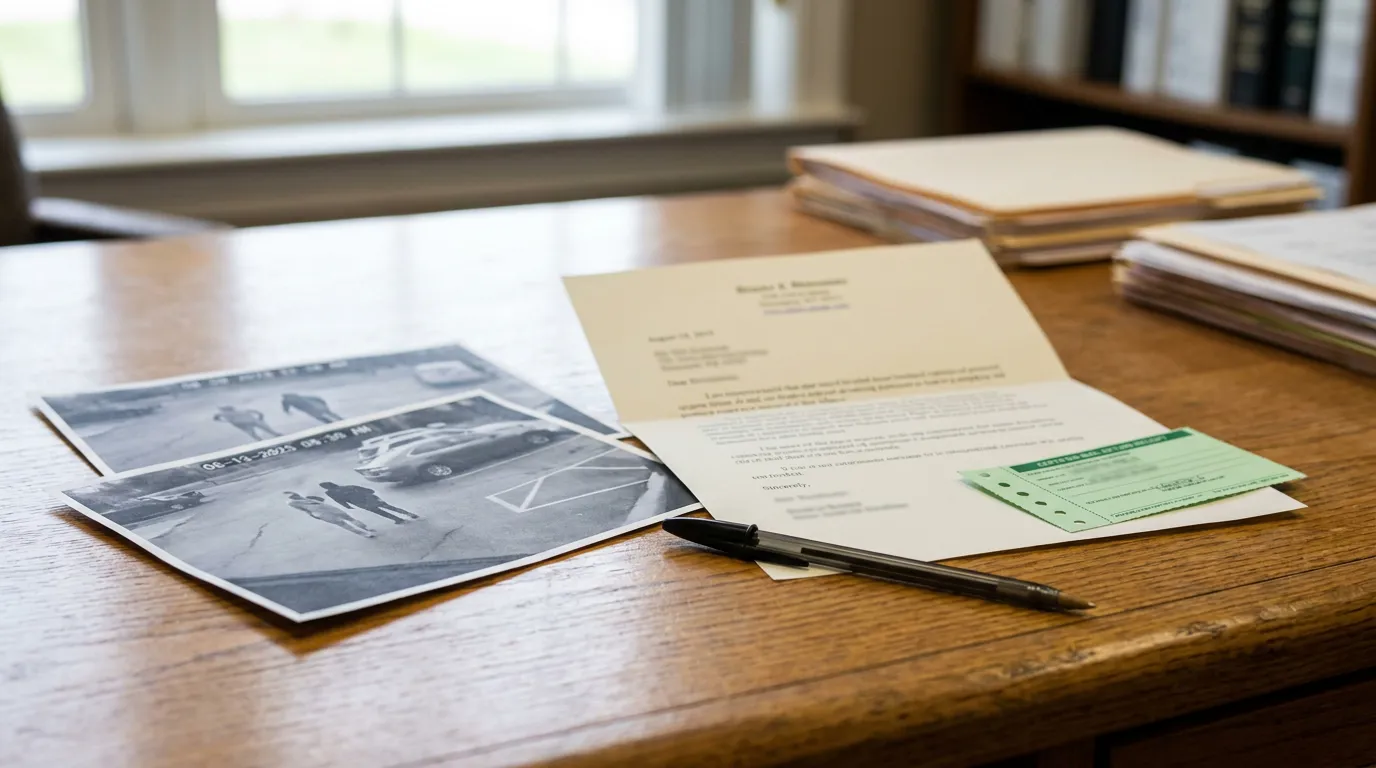
A spoliation letter functions as notice, not a court order. It identifies the date, time, and location of the incident, describes the cameras believed to hold relevant images, and demands that the recipient stop any routine deletion affecting that material. Because it is a private demand rather than a subpoena, compliance is not automatic, but ignoring it can carry consequences in later litigation.
Well-drafted preservation demands go beyond the video clip itself. Camera angles, retention schedules, and metadata can determine whether footage can be authenticated and used at trial. A narrow request risks receiving a thirty-second excerpt chosen by the defense rather than the full sequence showing how long a hazard sat unaddressed.
Information a Video Preservation Letter Typically Requests
- Raw, unedited footage for a defined window before and after the incident, not just the moment of the fall
- All camera views covering the area, including entrances, adjacent aisles, and exterior approaches
- The system’s retention and overwrite policy, plus the identity of the person who controls it
- Incident reports, inspection or sweep logs, and maintenance records tied to the same time period
- Any footage already copied, exported, or shared with an insurer or third-party administrator
💡 Pro Tip: Write down what you remember about camera locations before you leave the property, or take a photo of the ceiling domes. A preservation demand naming specific camera positions is harder to answer with "no footage exists."
The Illinois Legal Foundation for Evidence Preservation
Illinois does not recognize spoliation of evidence as an independent tort. Courts treat it as a form of negligence, meaning a plaintiff must generally establish a duty to preserve, a breach of that duty, and that the loss proximately caused an inability to prove the underlying suit. Legal commentary reviewing this framework, including analysis of the Boyd v. Travelers Insurance Co. standard published by the DuPage County Bar Association, explains that no duty to preserve exists unless one arises through an agreement, contract, statute, another special circumstance, or the defendant’s own voluntary undertaking to segregate or possess the evidence.
Courts applying that framework generally use a two-part inquiry: relationship and foreseeability. The relationship prong asks whether something in the parties’ dealings, or the possessor’s own conduct, created a preservation obligation. The foreseeability prong asks whether a reasonable person in the possessor’s position should have known the evidence was material to potential litigation. Both prongs generally must be satisfied, so a spoliation letter speaks most directly to foreseeability by making it harder to argue the owner had no idea the footage mattered; it does not by itself supply the relationship prong.
Why Notice Matters So Much
Without documented notice, a business may plausibly claim its system simply recycled the recording in the ordinary course. Illinois commentary on the duty to preserve evidence, including ISBA section newsletter coverage of spoliation issues, reflects ongoing attention to how notice affects the analysis. Once a written demand arrives, that ordinary-course explanation becomes harder to sustain, although courts still examine whether a preservation duty actually attached.
Timing can drive much of the analysis here. Claims where a letter went out within days of the incident are more likely to have usable footage. Claims where months passed frequently proceed on witness testimony alone, which is why failing to report a fall quickly can hurt a Chicago claim in ways that may be difficult to repair later.
Sending a Spoliation Letter for Surveillance Footage After a Fall
The sequence can matter more than the wording. A property owner cannot preserve what it cannot locate, so the demand should generally reach the right party, often a corporate registered agent, a property management company, and the insurer, rather than only a store manager. In multi-tenant Chicago buildings, the entity controlling the cameras may not be the entity that maintained the walkway.
Different recipients may control different pieces of the record. The chart below reflects a common pattern in Illinois premises cases, though the actual structure depends entirely on the facts of a given property.
| Likely Holder | Material Often Controlled | Practical Concern |
|---|---|---|
| Store or restaurant on site | Interior cameras, incident report | Short overwrite cycles, staff turnover |
| Property management company | Common areas, stairwells, lobbies | May deny control of tenant footage |
| Third-party security vendor | Exterior lots, garage entrances | Off-site servers, contractual retention limits |
| Insurer or claims administrator | Exported clips, adjuster file | May hold only selected excerpts |
Follow-up is part of the process. A single unanswered letter is generally weaker than a documented series of requests with delivery confirmation, since a record of repeated notice may support a later argument about the reasonableness of the owner’s conduct.
What Happens If the Footage Is Destroyed Anyway
Illinois law may provide remedies through evidentiary or discovery sanctions and negligence theory rather than a standalone spoliation claim. Depending on the facts, courts may consider sanctions under Illinois Supreme Court Rule 219(c), including an adverse inference instruction that lets jurors weigh the absence of evidence against the party that lost it, or may permit a negligence claim tied to the loss. These outcomes are discretionary and fact-dependent, and no result is assured.
Trust requires being candid about the limits. A destroyed video does not automatically win a case, and Illinois courts generally require the plaintiff to show the lost evidence was material and its loss prevented proving the underlying claim. Judges may also distinguish between routine automated overwriting before any preservation duty arose and deletion after a clear preservation demand.
How Video Connects to the Premises Liability Standard
Illinois abolished the old common-law distinction between invitees and licensees. Under the Premises Liability Act, an owner or occupier owes entrants lawfully on the property a duty of reasonable care under the circumstances regarding the condition of the premises and acts done or omitted on them; trespassers are generally treated differently. That single standard is generally what a plaintiff must build evidence around.
That same statute limits the scope of the duty. The reasonable care standard for landowners includes a provision stating there is no duty to warn of conditions that are known to the entrant, are open and obvious, or can reasonably be expected to be discovered, though Illinois courts recognize exceptions such as distraction and deliberate encounter. Footage is frequently one of the few objective ways to show whether a hazard was genuinely obvious or was concealed by lighting, floor color, or foot traffic.
What Video Tends to Prove
Constructive notice is often where store surveillance video can be significant to a case. A recording showing a spill sitting untouched for forty minutes while employees walked past may speak to notice more persuasively than testimony given a year later, though the plaintiff still must prove the condition was unreasonably dangerous and caused the injury. Video can also capture the absence of warning cones, the frequency of inspection sweeps, and the mechanism of injury itself.
Video cuts in both directions, and honest counsel says so. Footage sometimes undercuts a claimant’s account of how a fall occurred. A Chicago premises liability lawyer reviewing the material early may be better positioned to assess a claim realistically than one who first sees it in discovery.
Deadlines That Shape the Urgency
Illinois generally allows two years to file a personal injury lawsuit. Under 735 ILCS 5/13-202, actions for damages for injury to the person generally must be commenced within two years after the cause of action accrued. Other claim types carry different periods, and Illinois resources compiling selected statutes of limitations illustrate how much these deadlines vary.
Exceptions exist, but courts often construe them narrowly. Tolling provisions and discovery-rule arguments may apply in limited circumstances, such as claims involving minors or injuries not reasonably discoverable at the time. None apply automatically, and shortened deadlines or separate notice requirements may govern claims against public entities like a transit authority or municipal housing body. Those deadlines are distinct from the general two-year period and are often far shorter, so they should be confirmed with counsel promptly.
💡 Pro Tip: Two years to sue does not mean two years to gather evidence. Treat the footage as a two-week problem and the lawsuit as a two-year problem.
Frequently Asked Questions
1. Can I send a spoliation letter myself without an attorney?
Nothing prevents an injured person from sending a written preservation demand. That said, letters that fail to identify the correct legal entity, the specific cameras, or the relevant time window may be easier to sidestep, and self-drafted correspondence sometimes contains statements an insurer later uses to dispute the claim.
2. How long do Chicago businesses keep surveillance video?
Retention varies widely by system and industry, with many commercial setups cycling within roughly seven to thirty days. No general Illinois statute imposes a uniform retention period on private businesses, although specific industries may be subject to their own rules, which is one reason prompt preservation requests can matter.
3. Does a spoliation letter force a business to hand over the video?
Generally, no. A preservation demand asks the holder to keep the material intact; it does not typically compel production. Obtaining a copy usually requires voluntary cooperation or formal discovery once a lawsuit is filed.
4. What if the business says the camera was not recording?
That response is not necessarily the end of the inquiry. Maintenance records, vendor contracts, and system logs may show whether the camera functioned, and courts may consider inconsistent explanations when evaluating a party’s conduct regarding premises liability evidence.
5. Is a spoliation letter useful if I already gave a statement to the insurer?
It can still help, since the video and your statement serve different purposes. Preserving objective footage may protect an injured person whose recorded statement was incomplete or made while medicated.
Protecting the Evidence Before It Is Gone
Illinois generally treats spoliation as a negligence question rather than a freestanding tort, so an injured person’s leverage may depend heavily on whether a preservation duty attached and on documented notice sent early. A spoliation letter for surveillance footage is one practical tool that can help create that record, and under the Premises Liability Act’s reasonable care standard, video may supply some of the clearest proof of how long a hazard existed and whether it was truly open and obvious. Outcomes always depend on the particular facts, the property structure, and how quickly the request reaches the party that controls the system.
If a fall on someone else’s property left you injured, the surveillance video may already be counting down. McDevitt and Cobb P.C. is a Chicago personal injury firm that can evaluate your circumstances and pursue evidence preservation without delay. Call 312-332-0072 or request a case review today.
Disclaimer: This content is for informational purposes only and is not legal advice. Every case is unique, and results may vary. Consult an attorney about your specific circumstances.