The Clock That Runs Faster Than You Think After a Drunk Driving Crash
Key Takeaways: Illinois dram shop claims must generally be filed within one year of the injury under 235 ILCS 5/6-21. Illinois authority treats that deadline as a condition precedent rather than an ordinary limitations period. Tolling arguments rarely succeed, even for minors. The Act caps recovery, with separate caps for injury or property damage and for loss of means of support or society, adjusted annually and published by the Illinois State Comptroller. Caps apply to all liable establishments as a group. Certain claimants, including the intoxicated person, cannot recover. The Drug or Alcohol Impaired Minor Responsibility Act (740 ILCS 58/5) governs willfully supplying alcohol to minors under 18 and carries a two-year deadline. Because serving establishments are often unknown initially and evidence disappears quickly, early investigation is critical.
If you were hurt by an intoxicated driver in Illinois and believe a bar, restaurant, or banquet hall over-served that driver, you generally have only one year from the injury date to file a dram shop claim. That is dramatically shorter than the deadline most people assume applies to a car crash case.
If you are weighing a liquor liability lawsuit after a collision in DuPage, Kankakee, Will, or Winnebago County, the team at McDevitt and Cobb P.C. can help you understand what deadlines may apply. Call 312-332-0072 or reach out to our team today to discuss your options before the filing window closes.
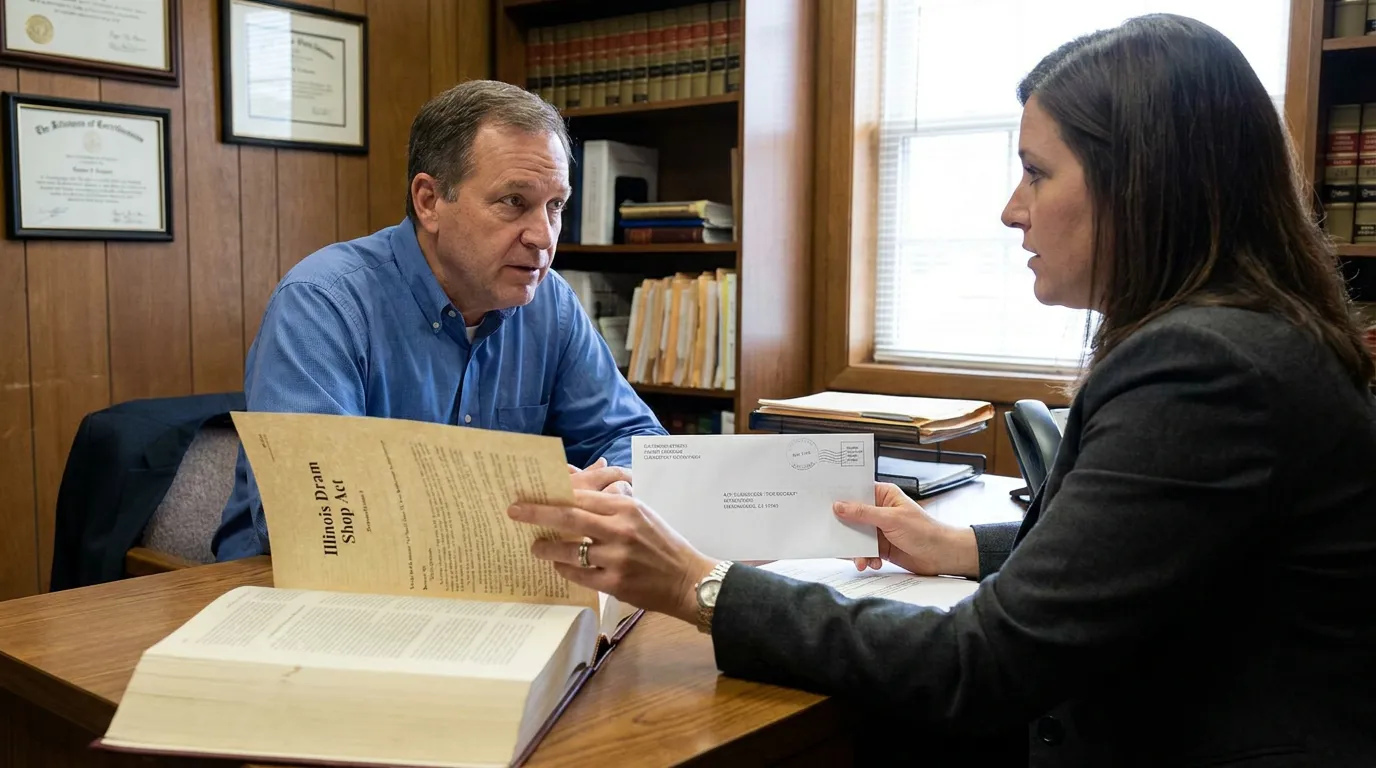
Where the Dram Shop Cause of Action Comes From
Illinois dram shop claims arise from Section 6-21 of the Illinois Liquor Control Act, 235 ILCS 5/6-21, which creates a remedy for people injured in person, property, or means of support by an intoxicated person. At common law, no such claim existed. As the Illinois Supreme Court observed in Cunningham v. Brown, 22 Ill. 2d 23 (1961), no reported case before the original Dram Shop Act of 1872 allowed recovery from a supplier of alcoholic liquor.
Because the legislature created the right, it also set the conditions for exercising it. When a cause of action is purely statutory, courts apply the legislature’s procedural terms strictly.
The Act imposes liability without requiring proof of negligence. In Cunningham, the court explained that fault on the tavern owner’s part was not essential to liability. However, a plaintiff must prove the statutory elements, including that the defendant sold or gave alcohol that caused the intoxication and that the intoxication caused the injury. In exchange for that broad reach, the legislature attached a shortened timeline and damage caps.
Understanding 235 ILCS 5/6-21 Dram Shop Limits and the One-Year Rule
Causes of action filed under the Dram Shop Act are subject to a one-year statute of limitations. Claims not commenced within one year after the cause of action accrued are generally barred under 235 ILCS 5/6-21. A victim injured by an intoxicated person typically has only one year from the accident date to commence legal action.
The 235 ILCS 5/6-21 dram shop limits also cap recovery. The Act sets one cap for personal injury or property damage and a separate, higher cap for loss of means of support or loss of society. Those statutory liability limits are adjusted annually based on the consumer price index, with applicable figures published by the Illinois State Comptroller by January 31 each year. Current figures for dram shop liability limits are published by the state.
Two additional statutory rules frequently surprise claimants. Under 235 ILCS 5/6-21(a), a plaintiff may not recover for both loss of means of support and loss of society arising from the same incident, the plaintiff must elect one or the other. However, a plaintiff is not barred from also recovering separately for personal injury or property damage in addition to whichever support or society category they elect. And where multiple dram shops are liable, the statutory limits apply to all liable dram shops as a group rather than multiplying per defendant.
A Deadline That Courts Treat as a Condition Precedent
Illinois authority suggests the one-year requirement is a condition precedent to the right to recover rather than an ordinary statute of limitations. Filing suit within one year under 235 ILCS 5/6-21 has been described as a condition precedent precisely because the statutory cause of action did not exist at common law, citing Morales v. Fail Safe, Inc., 311 Ill. App. 3d 231 (1st Dist. 1999). That characterization matters because conditions precedent are applied more rigidly than ordinary limitations periods.
Tolling Arguments Face an Uphill Climb
The dram shop time limit stands apart from the general Limitations Act, 735 ILCS 5/13-101 et seq. Illinois pattern instruction materials note that the restriction in 235 ILCS 5/6-21 is not subject to those general provisions, and that the period has been held not tolled even for injuries to minors, citing Seal v. American Legion Post No. 492. Readers can review the dram shop jury instruction commentary for further discussion.
Courts interpret exceptions to statutory deadlines narrowly. Limited doctrines such as equitable estoppel are fact-dependent and frequently unsuccessful in the dram shop context. Anyone hoping to rely on an exception should assume the one-year clock is running.
Who Can Be Held Liable, and Who Cannot Recover
Liability under the Act generally reaches those who sell or give alcohol that causes the intoxication, most often licensed retailers. The Act also reaches, in defined circumstances, owners or lessors of premises who knowingly permit the sale of alcohol there. Social hosts who serve adults generally are not liable under Illinois law.
Not everyone injured in an alcohol-related crash has a dram shop claim. Illinois courts have held that the intoxicated person has no cause of action for injuries he sustains, per Monsen v. DeGroot, 130 Ill. App. 3d 735 (1st Dist. 1985). Contributory or comparative negligence is generally not recognized as a defense, per Merritt v. Chonowski, 58 Ill. App. 3d 192 (3d Dist. 1978), although the distinct defense of complicity, meaning the plaintiff materially contributed to the person’s intoxication, can bar recovery.
The defendant establishment is often unknown on day one. Injured people typically learn where the driver had been drinking only after police reports, receipts, surveillance footage, and witness accounts are gathered. That investigative lag is why the one-year window closes on so many viable claims.
\u{1F4A1} Pro Tip: Video from a tavern’s security system is frequently overwritten within weeks. A written preservation request sent early can matter more than almost anything else.
A Different Statute, a Different Deadline
Illinois has a separate statute addressing those who willfully supply alcohol to persons under 18, and it carries a two-year deadline. Under the Drug or Alcohol Impaired Minor Responsibility Act, 740 ILCS 58/5, a person injured by an impaired person under 18 has a right of action against one who willfully supplies alcohol or drugs, and the Act bars an action unless commenced within two years after the right of action arises.
| Claim Type | Governing Statute | General Deadline |
|---|---|---|
| Dram shop claim against a licensed seller | 235 ILCS 5/6-21 | 1 year from injury |
| Willfully supplying alcohol to a minor under 18 | 740 ILCS 58/5 | 2 years from accrual |
| Typical Illinois personal injury negligence claim | 735 ILCS 5/13-202 | 2 years, subject to exceptions |
These timelines are general defaults, not guarantees. Procedural posture, defendant identity, and governmental entity involvement can all change what applies.
Common Challenges in Preserving a Dram Shop Claim
The biggest challenge is that a dram shop case usually rides alongside a separate negligence case against the driver. The two claims have different deadlines, different defendants, and different proof requirements. Pursuing the driver alone while the shorter liquor liability window quietly expires is one of the most avoidable mistakes.
Practical steps that often help preserve a claim include:
- Requesting the full crash report as soon as available
- Identifying every establishment the driver visited before the collision
- Preserving receipts, credit card records, and social media posts showing service
- Treating the injury date as day one of the one-year period
- Documenting all injuries and treatment from the outset
Readers who want context on how Illinois deadlines differ across claim types can compare this with the statute of limitations for premises liability in Illinois. Different claims carry different clocks. Assuming one deadline covers every theory of recovery is a recurring source of missed claims.
\u{1F4A1} Pro Tip: If more than one establishment served the driver, name and investigate each one early. Because statutory limits apply to liable dram shops as a group, the strategy for allocating a claim differs from ordinary multi-defendant litigation.
How an Illinois Attorney Approaches a Dram Shop Case
Handling a dram shop matter generally begins with rapid factual investigation. Counsel typically works to identify the serving establishment, confirm licensure, request preservation of evidence, and evaluate whether the facts support the statutory elements. Because the Illinois dram shop act deadline is short, this work often proceeds on a compressed schedule.
Our firm represents people hurt in alcohol-related collisions across DuPage, Kankakee, Will, and Winnebago Counties. If you need a 235 ILCS 5/6-21 dram shop limits lawyer to evaluate your case, an early conversation can help clarify which deadlines are running.
Frequently Asked Questions
1. Does the one-year dram shop deadline ever get extended?
Extensions are limited and courts construe them narrowly. Illinois materials indicate the period is not subject to the general Limitations Act and has been held not tolled even for injuries to minors. You should not assume any exception applies.
2. Can I sue the drunk driver and the bar in the same lawsuit?
In many cases, yes, but the claims are legally distinct. The negligence claim against the driver and the statutory claim under the Dram Shop Act have separate elements and deadlines, so both must be tracked independently.
3. How much can I recover under the Dram Shop Act?
Recovery is capped by statute, with different caps for personal injury or property damage and for loss of means of support or society. The caps change annually with the consumer price index and are published by the Illinois State Comptroller by January 31 each year.
4. What if the intoxicated person was my family member?
The intoxicated person generally cannot recover for his or her own injuries under the Act. Whether other family members have a claim depends on who was injured, how, and whether anyone materially contributed to the intoxication.
5. Does the deadline start on the crash date or the date I discovered the bar’s involvement?
The safest assumption is that the clock starts on the injury date. Discovery arguments may be raised in limited circumstances but are fact-dependent and not automatically accepted by Illinois courts.
Why Waiting Is the Riskiest Choice You Can Make
The Illinois Dram Shop Act gives injured people a powerful remedy against establishments that over-serve, but it pairs that remedy with a demanding one-year filing requirement, statutory caps adjusted annually, and rules that bar certain claimants entirely. Because the claim is purely a creature of statute, courts enforce its conditions strictly. For anyone injured by an impaired driver in DuPage, Kankakee, Will, or Winnebago County, the investigation needed to build a dram shop case takes time, and the statute does not grant much of it.
If you believe a licensed establishment contributed to the crash that hurt you, the attorneys at McDevitt and Cobb P.C. are ready to review the timeline that applies to your claim. Call 312-332-0072 or schedule your consultation now so the one-year deadline does not decide your case for you.