Understanding the 2026 Caps on Illinois Bar and Restaurant Liability
Key Takeaways: For dram shop judgments and settlements entered on or after January 20, 2026, Illinois caps recovery at $90,411.55 per person for injury to person or property and $110,503.00 in the aggregate for loss of means of support or loss of society. These limits come from the Illinois Dram Shop Act, 235 ILCS 5/6-21, and are recalculated annually using Consumer Price Index adjustments published by the Comptroller. Illinois claims are broader than most states because plaintiffs generally need not prove the patron was visibly intoxicated, though they must prove the defendant’s sale or gift of alcohol caused the intoxication and that the intoxication caused the injury. That breadth comes with dollar ceilings and a one-year filing deadline instead of the usual two years. Strong documentation, including receipts, surveillance video, staff statements, toxicology results, and medical records, often determines whether a claim approaches the cap. Separate paths exist outside the caps, including claims against the intoxicated driver, premises liability claims, and actions under the Drug or Alcohol Impaired Minor Responsibility Act, 740 ILCS 58, which allows broader damages.
If a drunk driver or intoxicated patron injured you in Illinois this year, the amount you can recover directly from the bar, restaurant, or liquor store that served the alcohol is capped by statute. For dram shop judgments and settlements entered on or after January 20, 2026, recovery for injury to a person or property generally may not exceed $90,411.55 for each person incurring damages, while claims for loss of means of support or loss of society are subject to a separate aggregate maximum of $110,503.00. These figures come from the Liquor Control Act of 1934, 235 ILCS 5/6-21, and are recalculated annually based on the Consumer Price Index.
If you are trying to understand what your claim may be worth, the team at McDevitt and Cobb P.C. is prepared to review the facts with you. Call 312-332-0072 or reach out to our Chicago team to discuss your options.
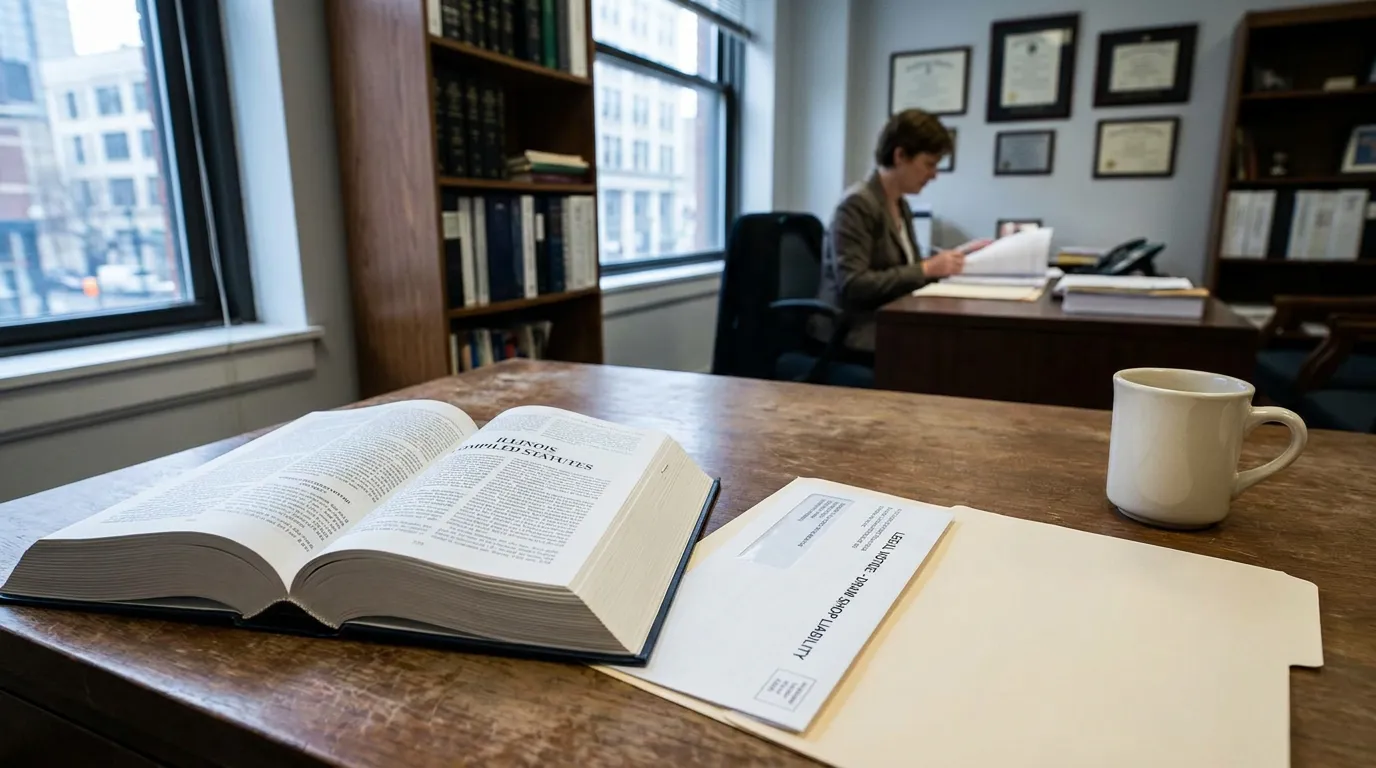
Where the Illinois Dram Shop Liability Limits Come From
The caps are not arbitrary numbers. The Illinois Dram Shop Act, codified at 235 ILCS 5/6-21 within the Liquor Control Act of 1934, creates a statutory cause of action allowing an injured person to bring a claim against one who, by selling or giving alcoholic liquor, caused that intoxication. The Act reaches licensed sellers and, in defined circumstances, property owners knowingly permitting liquor sales. Because the cause of action is statutory rather than common-law negligence, the legislature attached dollar ceilings that courts construe strictly.
Those ceilings move every year. The statute directs an annual inflation-based adjustment, and the Illinois Office of Comptroller calculates and publishes the updated maximums each January. You can review the current dram shop liability limits published by state licensing authorities to confirm the figures that apply to your date of judgment or settlement.
The Two Separate Caps Explained
Illinois law treats bodily injury and family-support losses as distinct categories. The first cap applies to injury to the person or property of any person. The second, higher cap applies to loss of means of support or loss of society resulting from death or injury caused by the intoxicated person.
| Damage Category | 2026 Maximum | Applies To |
|---|---|---|
| Injury to person or property | $90,411.55 | Each person incurring damages |
| Loss of means of support or loss of society | $110,503.00 | Aggregate across all claimants |
The aggregate nature of the second cap surprises many families. A surviving spouse and three children share a single $110,503.00 maximum arising out of one death or injury rather than each receiving that amount. That distinction meaningfully changes how wrongful death dram shop claims are evaluated and allocated.
How the 2026 Dram Shop Cap Compares to 2025
The 2025 limits were $88,051.76 and $107,618.82. The 2026 figures reflect the statutory CPI-based recalculation. Because the adjustment mechanism responds to inflation data, the liquor liability limit in Illinois can rise or, in a year of declining CPI, move downward.
💡 Pro Tip: The applicable cap generally tracks the date of final judgment or settlement, not the date of the crash. If your case is pending near a year-end transition, ask counsel how timing may affect your dram shop compensation limit.
Why Illinois Dram Shop Claims Are Broader Than in Most States
Illinois imposes liability without requiring proof of fault by the seller. Under 235 ILCS 5/6-21, plaintiffs generally do not need to prove that the establishment served a visibly intoxicated patron or a minor, which is a threshold requirement in many other states. Liability may arise from any sale or gift of alcohol that causes intoxication that in turn causes injury within Illinois. Plaintiffs must still prove that causal chain, and defenses remain available, including proof that the defendant’s alcohol did not cause the intoxication and the complicity defense barring recovery by a plaintiff who procured the drinking. The intoxicated person has no claim under the Act for his or her own injuries.
That breadth comes with a tradeoff. The same statute that eliminates a visible-intoxication element also imposes the dollar ceilings and a shortened filing deadline. In practice, a dram shop claim is often a supplement to, rather than a replacement for, a claim against the intoxicated driver and that driver’s insurer.
The One-Year Deadline That Catches People Off Guard
Actions under 235 ILCS 5/6-21 are subject to a one-year limitations period, notably shorter than the two-year window that generally governs Illinois personal injury actions. Missing that date can extinguish the dram shop claim even when the underlying negligence claim against the driver remains viable. Courts interpret exceptions to statutory deadlines narrowly, and while limited statutory tolling provisions exist for minors and persons under legal disability, such arguments are fact-specific and never automatic.
Evidence That Typically Drives Dram Shop Damages in Illinois
Because the caps limit the ceiling, the quality of proof often determines whether a claim approaches it. Cases are built on documentation gathered quickly, before receipts are purged and memories fade. Useful evidence commonly includes:
- Point-of-sale receipts, tabs, and timestamped card transactions
- Surveillance video from the establishment and surrounding businesses
- Server and bartender statements, staffing records, and training logs
- Police reports, blood-alcohol testing, and toxicology results
- Medical records, wage-loss documentation, and treating-provider opinions
Damages against the intoxicated driver are not capped the same way. Understanding the full picture of damages Illinois car accident victims can recover helps explain why the dram shop portion is usually one component of a broader recovery strategy.
A Separate Path When Alcohol Was Supplied to a Minor
Illinois has a second statute that operates outside the dram shop caps. The Drug or Alcohol Impaired Minor Responsibility Act, 740 ILCS 58, provides under 740 ILCS 58/5(a) that any person at least 18 years old who willfully supplies alcoholic liquor to a person under 18 and thereby causes that person’s impairment may be liable for resulting death or injury.
The available damages are considerably broader. Under 740 ILCS 58/10, claimants may pursue economic damages, non-economic damages such as pain, suffering, and loss of consortium, reasonable attorneys’ fees, costs of suit, and, in appropriate cases, punitive damages. No statutory dollar ceiling applies, though ordinary proof requirements and general limitations periods still govern.
Important Limitations on the Minor Responsibility Act
This statute contains its own carve-outs. Under 740 ILCS 58/20(a)-(b), an action may not be brought against a licensee or its employee who supplied alcohol to a person under 21 if the licensee complied with all applicable provisions of the Liquor Control Act of 1934, and the Act applies only to causes of action accruing on or after October 1, 2004. Whether these limitations apply is a fact-intensive question that often turns on licensing and compliance records.
💡 Pro Tip: Preserve any photographs, social media posts, or text messages showing who purchased or served the alcohol. In minor-supplier cases, that informal evidence frequently proves more useful than formal business records.
How These Claims Intersect With Premises Liability
Alcohol-related injuries sometimes involve unsafe conditions as well as unsafe service. A patron assaulted in a poorly lit parking lot or injured on a defective stairway may have claims sounding in property negligence in addition to any statutory liquor claim. Our attorneys handle these overlapping matters, and readers can learn more about working with an illinois dram shop liability limits lawyer in these situations.
Premises claims are not subject to the dram shop ceilings. They proceed under ordinary negligence principles requiring proof of duty, breach, causation, and damages, and unlike dram shop claims they are subject to comparative fault.
Frequently Asked Questions
1. Does the Illinois dram shop act limit apply to every alcohol-related injury claim?
No. The cap applies to claims brought under 235 ILCS 5/6-21 against the seller or provider of the alcohol. Claims against the intoxicated driver or claims under 740 ILCS 58 are governed by different rules.
2. Can I recover both caps in the same case?
In some circumstances, yes, because the injury cap and the loss-of-support cap address different categories of harm. However, the loss-of-support maximum is a single aggregate amount shared among all eligible claimants arising from one death or injury. The specific allocation depends on the facts and how the claim is pleaded.
3. Do social hosts face the same illinois bar liability cap?
Generally, the Dram Shop Act applies to those licensed or in the business of selling or giving away alcohol rather than private hosts. Illinois social host exposure is narrower and typically arises under the minor responsibility statute or other limited theories.
4. How is the 2026 dram shop cap calculated?
The Comptroller applies the annual change in the Consumer Price Index to the prior year’s published amounts under the Liquor Control Act of 1934. The revised figures are then published for use in judgments and settlements entered on or after January 20, 2026.
5. Is the one-year deadline ever extended?
Only in limited circumstances, such as statutory tolling for minors or persons under legal disability, and courts construe such exceptions narrowly. No extension should be assumed to apply automatically.
Protecting the Value of Your Claim Before the Clock Runs
The illinois dram shop liability limits for 2026 set a ceiling of $90,411.55 per injured person and $110,503.00 in the aggregate for loss of support or society. Those numbers, the one-year filing deadline, and the interplay with claims against the driver or property owner all shape realistic dram shop claim value in Illinois.
If an intoxicated driver or over-served patron has harmed your family, McDevitt and Cobb P.C. attorneys are ready to evaluate whether a dram shop claim belongs in your case. Call 312-332-0072 or schedule your free consultation today.