Understanding Fault When a Railing Fails in a Chicago Building
Key Takeaways: When a railing fails in a Chicago building, liability generally rests with whoever controlled the property and failed to keep it reasonably safe, most often the building owner, though landlords, property managers, maintenance companies, or commercial tenants may share fault. Illinois grounds this duty in negligence under the Premises Liability Act, requiring proof that the responsible party had actual or constructive notice of the hazard and failed to act. Lease waivers attempting to shield owners from their own negligence are void. Evidence such as prior complaints, photographs, and posted code-violation notices can demonstrate notice. Injured people generally have two years to file, and owners often raise defenses like the open and obvious doctrine.
When a handrail or guardrail gives way and someone falls, responsibility generally rests with the party that controlled the property and failed to keep it reasonably safe. In most cases, that party is the building owner, though a landlord, property manager, or maintenance company may share fault depending on who was responsible for inspection and repair. Illinois law grounds this responsibility in negligence, meaning an injured person must show the responsible party knew or should have known about the hazard and failed to act. A knowledgeable premises liability lawyer in Chicago can help identify which parties owed a duty and how that duty was breached.
If you were hurt by a broken railing, the team at McDevitt and Cobb P.C. is ready to review your situation. Call us at 312-332-0072 or reach out through our contact page to discuss your options.
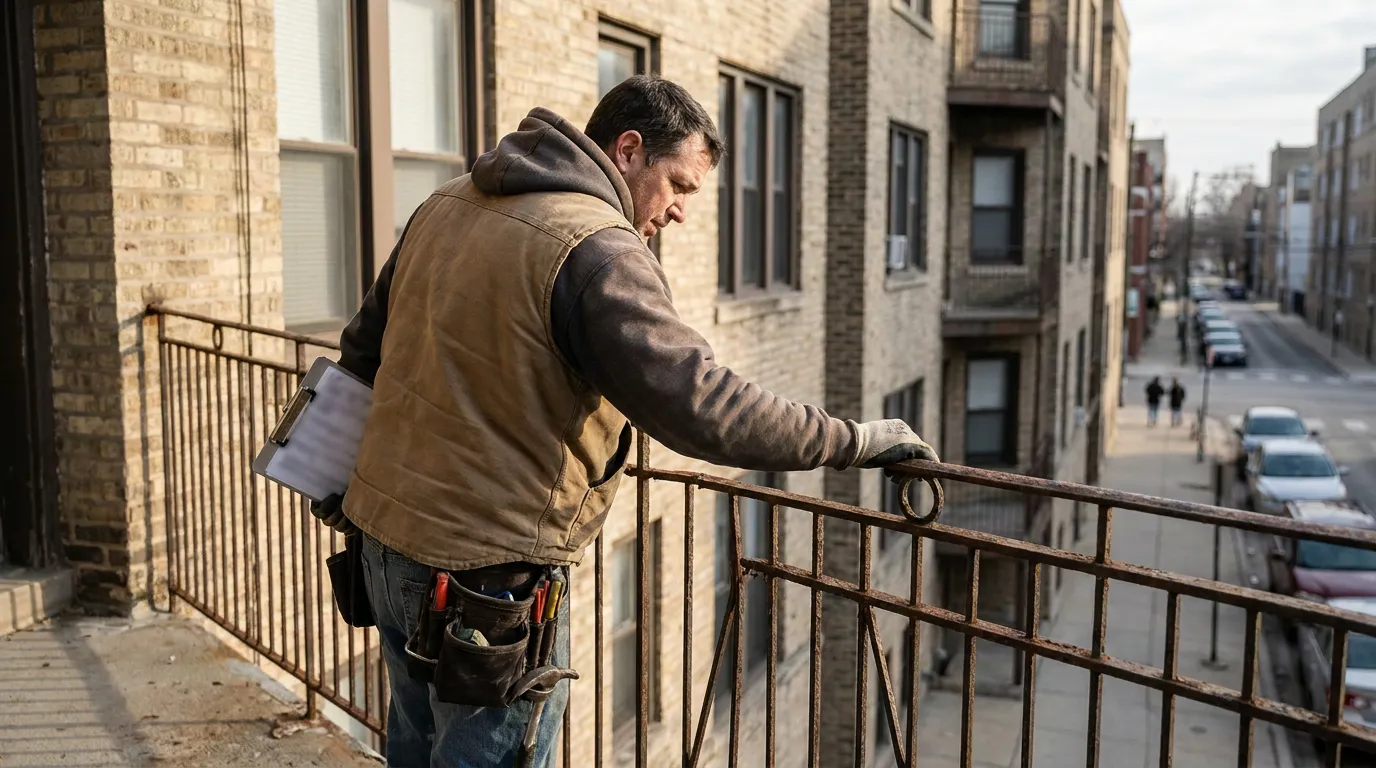
How Illinois Premises Liability Law Frames Railing Injuries
Illinois evaluates railing failures under the state’s premises liability framework, which sets the duty owners and occupiers owe to people on their property. Under the Premises Liability Act, 740 ILCS 130/1 et seq., an owner or occupier owes entrants a duty of reasonable care under the circumstances regarding the state of the premises or acts done or omitted on them.
The Act also reshaped who qualifies for that protection. The 1984 Premises Liability Act abolished the common-law distinction between invitees and licensees, so most lawful visitors, including tenants and guests, are owed the same reasonable-care duty. To understand the statutory framework, review how the Illinois Premises Liability Act defines these obligations.
Liability Is Based on Negligence, Not Guarantees
Property owners are not automatically responsible for every injury on their land. Illinois follows Section 343 of the Restatement (Second) of Torts: a land possessor is liable for a dangerous condition only if it knew or through reasonable care would have discovered the condition, should have realized it posed an unreasonable risk, and should have expected visitors would not protect themselves.
💡 Pro Tip: Photograph the railing from multiple angles immediately after a fall, including loose brackets, rust, rotted wood, or missing screws. This documentation can establish the condition existed long enough that a reasonable owner should have discovered it.
Who Can Be Held Responsible After a Railing Collapse
More than one party may be accountable for a railing failure, depending on who controlled and maintained the area where the injury occurred. In residential buildings, landlords frequently control common areas such as stairwells and porches, placing the duty of inspection and repair on them. In commercial settings, an owner, tenant business, or maintenance contractor may share responsibility. Determining control is often the central question in a Chicago building injury claim.
Common defendants in a broken handrail lawsuit may include:
- Building owners who neglected inspection or repair of stairs and railings
- Landlords responsible for maintaining common-area stairwells and porches
- Property management or maintenance companies hired to service the premises
- Commercial tenants who controlled the specific area where the railing failed
💡 Pro Tip: Keep copies of any repair requests, emails, or text messages you sent to a landlord or manager about a wobbly or unsafe railing. Prior complaints can be strong evidence of actual notice.
Lease Waivers Rarely Shield Owners From Liability
Illinois public policy strongly limits a property owner’s ability to contract away responsibility for its own negligence. Any lease clause attempting to shield a landlord from liability for injuries caused by their own negligence, such as a defective railing, is void and unenforceable. Even a signed lease containing such a waiver will not protect the owner from a premises liability claim. You can read the governing statute in the Landlord Liability Exemption Act, codified at 765 ILCS 705/1.
The same public policy limits indemnification workarounds. Illinois courts treat lease provisions requiring a tenant to indemnify or hold a landlord harmless for personal injuries caused by the landlord’s own negligence as void under 765 ILCS 705/1. Property owners cannot use contractual language to shift liability for a fall caused by a broken handrail onto tenants when the owner’s negligence is the proximate cause.
Proving a Property Owner’s Negligence
Building a defective railing case usually turns on notice, causation, and documentation of the hazardous condition. An injured person must show the owner had actual or constructive notice of the dangerous railing, that the danger created an unreasonable risk, and that the failure caused the injury. Code analysis and physical evidence often play a central role.
Official records can significantly strengthen a claim. When a Chicago or Illinois municipal building code department identifies a code violation such as a defective railing, it must post a conspicuous notice of violation near the building’s main entrance. Under 50 ILCS 810/2, this posted notice can serve as powerful evidence, demonstrating the owner had official, documented notice of an unsafe condition and failed to remediate it.
Regulatory enforcement can run parallel to a civil case. Illinois law empowers the Attorney General to investigate and enforce building accessibility and safety code violations in public facilities and multi-story housing. Under 410 ILCS 25/6, owners found in violation can face civil penalties of up to $250 per day. These administrative penalties are separate from any personal injury lawsuit, though the same failure can support both.
Common Challenges Injured People Face
Owners and insurers frequently dispute notice, causation, and the severity of injuries. Insurers often argue that the railing was not defective, that the condition arose too recently to have been discovered, or that the fall did not cause the claimed harm. Building owners typically rely on liability insurance to cover legal defense, settlements, and judgments. Careful factual development, and often engineering or code evidence, can help meet these challenges.
💡 Pro Tip: Seek medical attention promptly and follow through with treatment. Gaps in care are one of the most common arguments insurers use to dispute causation and injury extent.
Defenses and Deadlines That Can Affect Your Claim
One defense owners commonly raise is that the hazard was open and obvious. The open and obvious condition doctrine may reduce or negate a landowner’s liability where the danger was apparent to a reasonable person. This defense is fact-dependent and subject to recognized exceptions, such as the distraction and deliberate-encounter exceptions.
Deadlines are equally important, and Illinois enforces them strictly. The general statute of limitations for personal injury claims, including those arising from a defective railing injury in a Chicago building, is two years from the date the cause of action accrued. The controlling statute, 735 ILCS 5/13-202, provides that personal injury actions must be commenced within two years. Courts interpret exceptions narrowly.
| Issue | General Illinois Rule | Practical Note |
|---|---|---|
| Filing deadline | Two years from accrual under 735 ILCS 5/13-202 | Exceptions are read narrowly |
| Lease waivers | Void under 765 ILCS 705/1 | Cannot shift owner negligence to tenant |
| Duty owed | Reasonable care under 740 ILCS 130/1 et seq. | Applies to most lawful visitors |
| Code notice | Posted under 50 ILCS 810/2 | Can show documented notice |
How a Premises Liability Lawyer in Chicago Can Help
A premises liability lawyer in Chicago can investigate the hazard, identify every responsible party, and preserve the evidence that a successful claim depends on. Injured parties in a railing-failure case may recover damages such as medical expenses and lost wages, though outcomes depend on the specific facts. Guidance from an experienced Chicago injury attorney can help you understand notice, causation, and the value of documenting unsafe stairs before evidence disappears. Our overview of our premises liability lawyer Chicago services explains the process in greater depth.
💡 Pro Tip: Do not give a recorded statement to an insurance adjuster before understanding your rights. Early statements can be used later to dispute how the injury happened.
Frequently Asked Questions
-
Who is usually liable for a broken railing in an apartment building?
Liability generally falls on whoever controlled and maintained the area where the railing failed. In many residential buildings, landlords retain control over common-area stairs and porches, placing the duty of repair on them. -
Can my landlord avoid liability because I signed a lease waiver?
Generally not, when the injury results from the landlord’s own negligence. A lease clause attempting to shield a landlord from liability for injuries caused by their own negligence is void under 765 ILCS 705/1. -
How long do I have to file a defective railing claim in Illinois?
In most cases, two years from the date the injury occurred. The statute governing premises liability cases sets a two-year window, and injured parties who miss it risk dismissal. -
Does a posted code violation help my case?
It can be valuable evidence of notice. A posted notice of violation can demonstrate the owner had official, documented notice of an unsafe condition and failed to fix it, supporting the negligence element of a claim. -
What if the danger was obvious?
The owner may raise the open and obvious doctrine, but it is not absolute. This doctrine may reduce or negate liability, yet it is fact-dependent and subject to exceptions that courts evaluate case by case.
Protecting Your Right to Recover After a Railing Injury
A defective railing injury in a Chicago building can involve several potentially responsible parties, strict deadlines, and defenses that require careful factual and legal analysis. Illinois law provides meaningful protections for injured people, from the reasonable-care duty under the Premises Liability Act to statutes that void lease waivers and require posted code-violation notices. Because liability depends on notice, control, causation, and the specific circumstances of each fall, prompt investigation and documentation are essential.
If a broken railing left you injured, the attorneys at McDevitt and Cobb P.C. are prepared to help you understand your rights and pursue accountability. Call us today at 312-332-0072 or start your case review online to take the next step toward recovery.