Understanding Winter Fall Injuries on Icy Chicago Property
Key Takeaways: The natural accumulation rule is an Illinois doctrine that generally shields property owners from liability when someone slips on naturally formed snow or ice. However, important exceptions exist. Ice may be deemed "unnatural" when building defects such as faulty drainage, broken downspouts, poor roof pitch, or sunken pavement cause or worsen it. Businesses owe an independent duty to provide invitees safe ingress and egress. While the Snow and Ice Removal Act immunizes residential owners for negligent removal efforts so long as the misconduct was not willful or wanton, it does not cover injuries from negligent failure to maintain premises. Chicago ordinances add obligations to keep sidewalks clear, though violations don’t automatically establish civil liability. Because evidence can vanish quickly, prompt documentation and early legal review are critical.
The natural accumulation rule is an Illinois legal doctrine that generally protects property owners from liability when someone slips on naturally gathered snow or ice. A landowner usually has no duty to remove precipitation that nature deposited. However, when ice forms unnaturally due to defective drainage, broken downspouts, or poor construction, an injured person may still have a viable claim under Illinois law.
If you fell on ice and are unsure whether the property owner can be held responsible, the team at McDevitt and Cobb P.C. can review what happened. Call us at 312-332-0072 or reach out through our contact page to discuss your situation.
Defining the Natural Accumulation Rule in Illinois
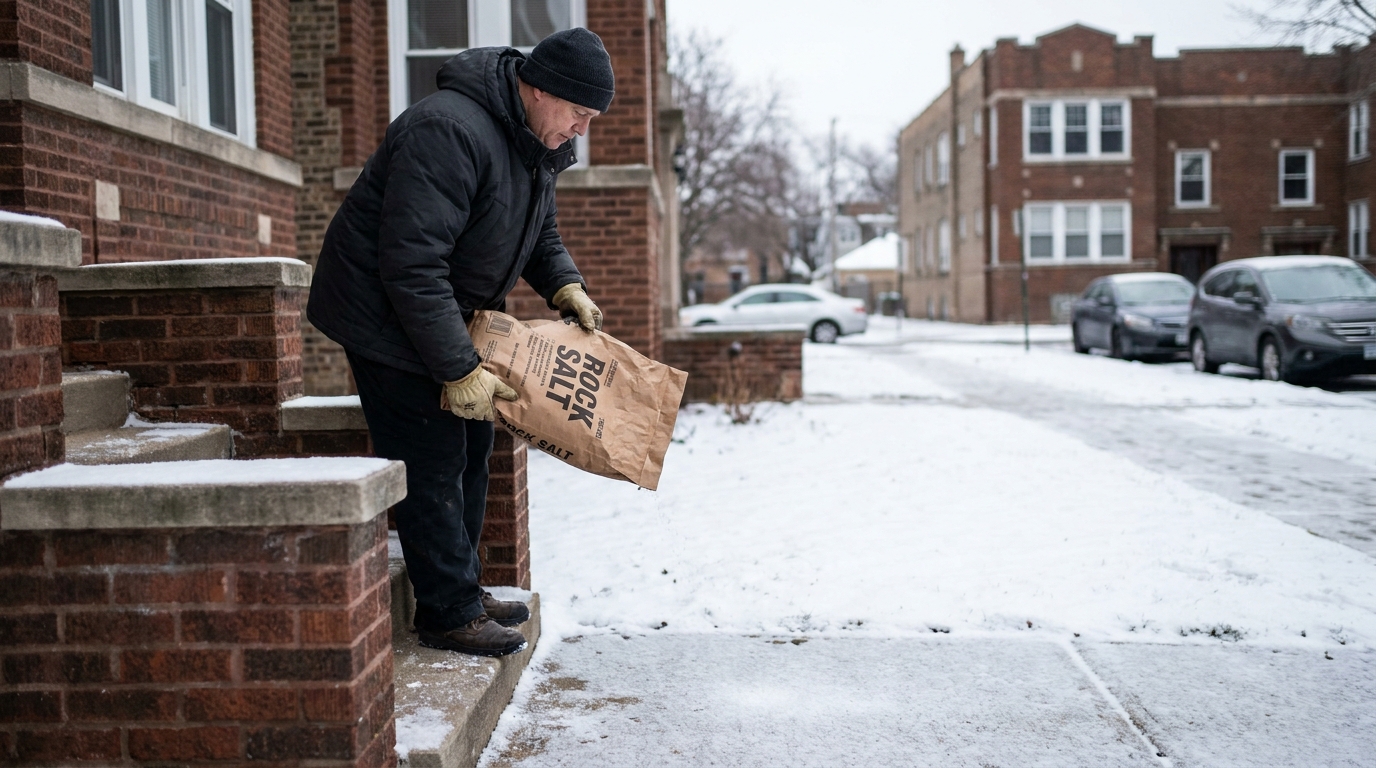
At its core, the natural accumulation rule recognizes that Illinois winters produce snow and ice that no property owner can fully control. Because precipitation is natural and expected, courts generally don’t impose a duty on landowners to clear every flake. This rule frequently leads to summary judgment for defendants in ordinary slip-and-fall cases where ice formed solely from a storm.
However, the rule is not absolute, and this distinction is where many ice slip and fall Illinois claims succeed or fail. Illinois courts have acknowledged important carve-outs. A property owner may be held liable if ice or snow accumulation becomes unnatural due to the design and construction of the premises. The question is rarely just "was there ice," but rather "why was the ice there and what created it."
💡 Pro Tip: Photograph the exact spot where you fell as soon as possible, including nearby gutters, downspouts, drains, and sloped pavement. These images can later help show whether the ice was natural or unnatural.
When Ice Becomes "Unnatural": The Key to Liability
The line between natural and unnatural accumulation is the central battleground in snow and ice liability Illinois cases. When water is channeled, blocked, or redirected by a building defect and then refreezes on a walkway, the resulting ice may no longer be considered natural.
Building Defects That Create Liability
Specific construction and maintenance failures can transform ordinary winter ice into an actionable hazard. Illinois plaintiffs have pointed to various defects to support unnatural accumulation Illinois law arguments, including improperly pitched roofs, incorrectly hung gutters and downspouts, inadequate numbers of downspouts, and improper drainage.
In one instructive case, a plaintiff fell 11 days after a 20-inch February 2011 snowstorm. Despite the storm, her claim survived because she alleged the ice resulted from negligent drainage, defective sidewalks, and broken downspouts that created an unnatural accumulation, not merely from natural snowfall.
Common conditions that may support an unnatural accumulation theory include:
- Downspouts that discharge water directly onto a walking surface
- Improperly pitched roofs or overhangs that funnel melt onto sidewalks
- Defective or sunken pavement that traps and refreezes runoff
- Drainage systems that redirect water across pedestrian paths
💡 Pro Tip: Keep any work orders, complaint emails, or text messages about a leaking gutter or pooling water. Evidence that the owner knew about a defect before your fall can support constructive notice and foreseeability.
Business Owners and Safe Ingress and Egress
Businesses face a duty that exists independently of the natural accumulation rule. Courts treat business operators differently from building owners. A business owes a duty to its invitees to provide a reasonably safe means of ingress and egress.
This duty can require affirmative steps. When a property owner prescribes a means of ingress and egress, it has a duty to illuminate properly and give adequate warning of known dangerous conditions, or repair the condition. Importantly, a defendant’s duty to provide invitees a reasonably safe means of ingress and egress is not abrogated by natural accumulation of snow or ice. The doctrine also applies to falling ice and snow from buildings, not just slip-and-fall cases.
The Snow and Ice Removal Act and Its Limits
The Illinois Snow and Ice Removal Act adds another layer for residential properties. The Act provides immunity to residential owners and operators under 745 ILCS 75/2, so long as the misconduct was not willful or wanton. However, this immunity has a defined boundary that often determines winter slip and fall Chicago cases.
The key is what allegedly caused the ice. The Illinois Supreme Court drew a careful distinction: The Act provides immunity from claims for injuries allegedly caused by icy sidewalks resulting from negligent snow and ice removal efforts, but not from injuries caused by icy sidewalks resulting from an otherwise negligent failure to maintain the premises. You can read the full Illinois Supreme Court ruling to see how the court separated negligent shoveling from negligent maintenance.
| Theory of the Case | General Effect on Liability |
|---|---|
| Natural accumulation from a storm | Owner usually has no duty; claim often barred |
| Negligent snow removal (residential) | May be barred by the Snow and Ice Removal Act |
| Unnatural accumulation from defects | Owner may be liable despite the rule |
| Unsafe ingress/egress at a business | Duty exists independent of the rule |
How Chicago’s Snow Removal Rules Fit In
Chicago imposes its own local responsibilities on top of common-law doctrines. According to the Municipal Code of Chicago (4-4-310 & 10-8-180), property owners and occupants are responsible for keeping sidewalks clear of snow and ice.
The ordinance reaches all home, business, and property owners in Chicago. Business owners that rent space adjacent to sidewalks are responsible for shoveling snow under the ordinance. The city’s published sidewalk snow removal rules explain these duties. Residents can report uncleared locations through a "Snow-Uncleared Sidewalk or Bike Lane" 311 service request.
A violation of a local ordinance does not automatically equal civil liability. However, evidence of a code obligation can help illustrate the standard a property owner was expected to meet.
💡 Pro Tip: If you reported an uncleared sidewalk to 311, save the service request number. That record can help document a hazardous condition and the timing of complaints.
Why You May Need a premises liability lawyer in Chicago
Sorting natural ice from unnatural ice requires careful factual and code analysis that most injured people cannot do alone. A knowledgeable premises liability lawyer in Chicago can investigate drainage patterns, gather maintenance records, and consult engineering professionals to determine whether a defect created the hazard.
Proving an unnatural accumulation generally demands more than describing the fall. It frequently involves photographs, weather data, witness statements, and sometimes professional reconstruction of how water traveled across a property. A seasoned slip and fall attorney Chicago residents trust can help build that record while you focus on recovery. Visit our premises liability lawyer in Chicago practice page to learn how our firm approaches these claims.
Timing matters because evidence of an unnatural accumulation can disappear quickly. Melting ice, repaired downspouts, and replaced sidewalks can erase proof of the original defect. Explore helpful articles on our Chicago injury law insights page. Acting promptly helps preserve a potential property owner ice liability Illinois claim.
💡 Pro Tip: Seek medical attention right away, even if your injuries feel minor. Prompt treatment records connect your injuries to the fall and reduce disputes over causation.
Frequently Asked Questions
1. Does the natural accumulation rule mean I can never sue after an ice fall?
No, the rule is a default, not a complete bar. While owners generally have no duty to remove naturally formed snow or ice, you may still recover if a defect created an unnatural accumulation or if a business failed to provide safe ingress and egress.
2. What makes an ice accumulation "unnatural" in Illinois?
Ice becomes unnatural when a human-made condition causes or worsens it. Examples include defective downspouts, improper roof pitch, or drainage that channels water onto a walkway.
3. Does the Snow and Ice Removal Act stop my claim?
It can, but only in limited circumstances. The Act (745 ILCS 75/2) immunizes residential owners for injuries tied to negligent snow removal efforts so long as the misconduct was not willful or wanton. It does not extend to injuries caused by negligent failure to maintain premises, such as defective drainage.
4. Do Chicago’s snow ordinances make a property owner automatically liable?
Not automatically. The Municipal Code (4-4-310 & 10-8-180) requires owners to clear sidewalks, but an ordinance violation doesn’t guarantee civil liability. However, it can help show the expected standard of care.
5. How soon should I talk to a lawyer after a winter fall?
As soon as reasonably possible. Physical evidence of an unnatural accumulation often vanishes quickly once ice melts or repairs occur. Early legal review helps preserve documentation and protect a potential Chicago ice injury claim.
Protecting Your Right to Recover After an Ice Fall
The natural accumulation rule shapes nearly every Chicago ice case, but it rarely tells the whole story. Illinois law recognizes that defective drainage, broken downspouts, poor construction, and unsafe business entrances can transform winter precipitation into a dangerous, actionable hazard. Understanding these distinctions is the first step toward holding a negligent property owner accountable.
If a winter fall left you injured on someone else’s property, don’t assume your case is hopeless because it started with a snowstorm. Contact McDevitt and Cobb P.C. today by calling 312-332-0072 or by scheduling a consultation online so we can evaluate whether an unnatural accumulation or maintenance failure supports your claim.